
AI-narrated version of this post using a synthetic voice. Great for accessibility or listening while busy.
When I first read about Niantic’s delivery robot deal and what it actually meant for the tens of millions of people who played Pokémon Go over the past decade, I had to put my coffee down and just sit with it for a moment. I’ve spent years covering the intersection of consumer technology and artificial intelligence, and I’ve seen plenty of clever data plays — but this one hit differently. The idea that a global gaming phenomenon was quietly functioning as the world’s largest crowdsourced mapping project is the kind of story that reframes everything you thought you knew about how modern AI gets built. This is the definitive guide to understanding exactly what happened, why it matters, and what it means for every app you’ll ever use going forward.
Key Takeaways
- Niantic retained over 30 billion images captured by Pokémon Go players during its scan features, even after selling the game to Scopely.
- That visual data now powers a robot navigation system actively guiding delivery robots through real city streets in Los Angeles, Chicago, and Helsinki.
- PokéStop placement was not random — locations were strategically chosen to maximize photographic coverage of urban environments.
- This practice mirrors what Google did with reCAPTCHA, where users unknowingly labeled training data for self-driving vehicle systems.
- The trend raises serious questions about informed consent, data ownership, and the future of crowdsourced AI training.
What Actually Happened: The Full Story
Pokémon Go players spent years — a full decade, in fact — contributing to one of the most sophisticated urban mapping datasets ever assembled, and almost none of them knew it was happening. When Niantic sold Pokémon Go to mobile gaming company Scopely in 2025, it made a pointed decision to retain all of the visual and spatial data that players had generated through the game’s scanning features. That data, comprising more than 30 billion images captured across cities worldwide, became the foundation of a proprietary robot navigation system that is now commercially deployed.
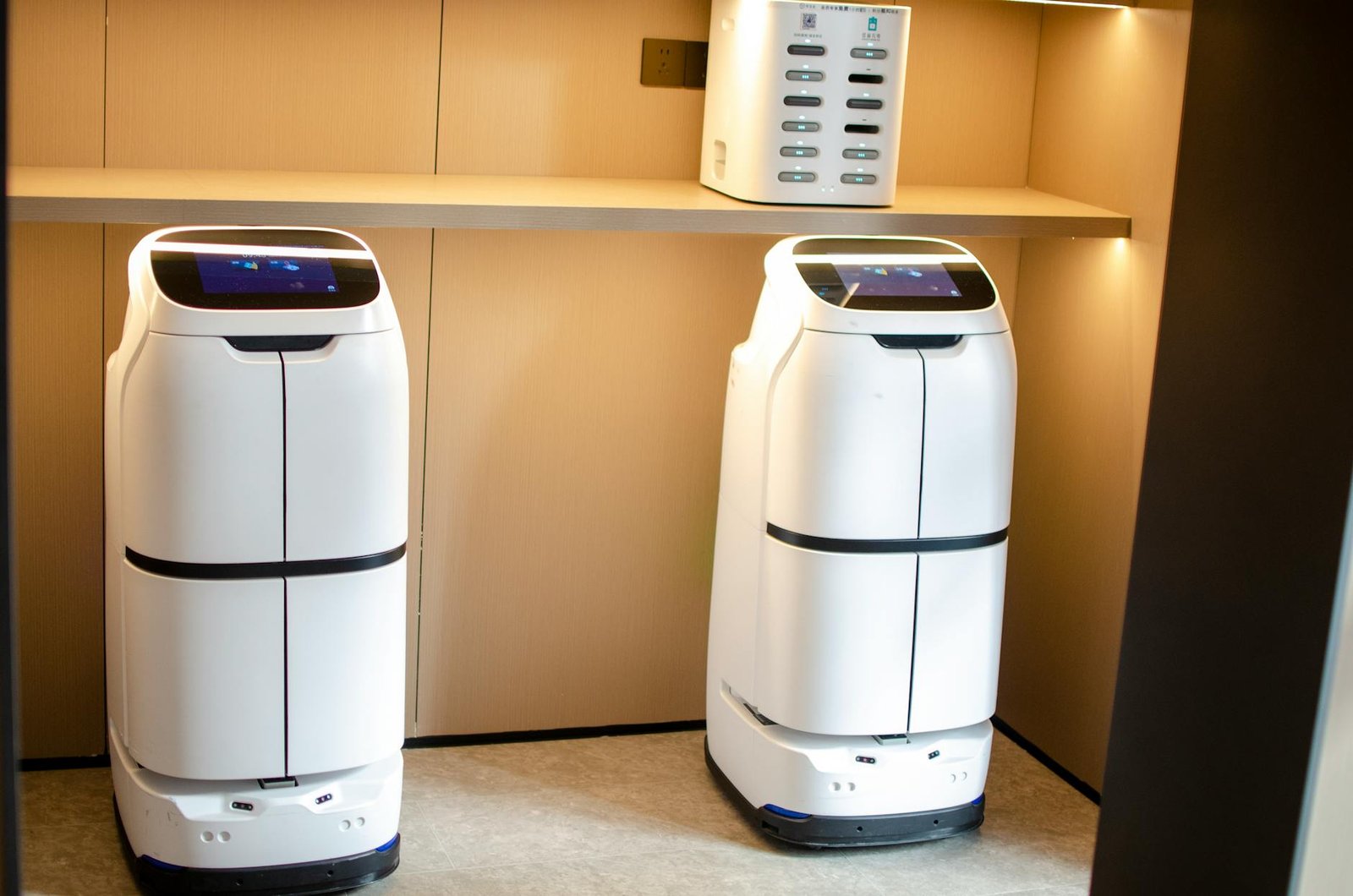
The robots guided by this system are currently operating in Los Angeles, Chicago, and Helsinki — navigating sidewalks, avoiding pedestrians, and making last-mile deliveries in complex urban environments. Niantic has pivoted from being a gaming company into a spatial computing and robotics infrastructure provider, and the raw material for that transformation was generated entirely by unpaid players who thought they were simply catching virtual creatures.
How PokéStops Were Engineered for Data Collection
One of the most revealing details to emerge from Niantic’s announcement is that PokéStop placement was never purely about gameplay. Industry analysts note that the locations were selected with a specific data-coverage goal in mind: to ensure that players would photograph and scan as many distinct urban surfaces, intersections, storefronts, and landmarks as possible.
The Scanning Feature Explained
Starting around 2019, Niantic introduced an AR scanning feature that invited players to walk around PokéStops and record short video clips from multiple angles. The stated purpose was to improve augmented reality accuracy within the game. In practice, what players were doing was performing structured photogrammetry — the same technique professional surveyors use to build three-dimensional models of physical spaces. Each scan added depth, texture, and positional data to a growing spatial map of the real world.
Why the Data Was So Valuable
Standard mapping tools like satellite imagery or LiDAR scans are expensive to collect and go stale quickly. Street-level conditions — construction zones, new signage, seasonal changes to vegetation, temporary obstacles — shift constantly. What Niantic accumulated was something far more dynamic: a living, continuously updated visual record of urban environments at pedestrian eye level, captured across every season and time of day, in hundreds of cities simultaneously. For a robot that needs to navigate a sidewalk at 9 p.m. in the rain, that kind of granular, real-world visual context is extraordinarily difficult to replicate through any other means.
The Robot Navigation System Niantic Built
Niantic’s navigation platform uses the accumulated scan data to create what the company describes as a persistent spatial map — essentially a detailed, machine-readable model of the physical world that robots can query in real time to understand their surroundings. Rather than relying solely on onboard sensors, a delivery robot using this system can cross-reference what its cameras see against Niantic’s stored map to localize itself with high precision, even in GPS-degraded environments like dense urban canyons.
| Feature | Traditional Robot Navigation | Niantic Spatial Map System |
|---|---|---|
| Data Source | Onboard LiDAR and cameras | 30 billion+ crowdsourced images |
| Map Freshness | Static or infrequently updated | Continuously updated via players |
| Urban Coverage | Limited to pre-mapped routes | Broad pedestrian-level coverage |
| GPS Dependency | High | Low — visual localization capable |
| Cost to Build | Very high (dedicated survey crews) | Effectively zero (crowdsourced) |
Why Pokémon Go Players Spent Years in a Much Bigger Trend
This story would be remarkable in isolation, but the reality is that Pokémon Go players spent years participating in a pattern that has become central to how the technology industry builds AI systems. The most famous parallel is Google’s reCAPTCHA program. For years, every time an internet user clicked on traffic lights, crosswalks, or fire hydrants to prove they were not a robot, they were simultaneously labeling training data for Google’s autonomous vehicle project. Millions of hours of cognitive labor, contributed freely and without specific disclosure, went into teaching machines to see the world the way humans do.
What this means for users is that the products and services they interact with daily are frequently functioning as data pipelines feeding into entirely separate commercial ventures. Data labeling, which is the process of tagging images, audio, or text so that machine learning models can learn from them, is one of the most labor-intensive and expensive steps in building any AI system. Companies that can offload this work to consumers through engaging products gain a structural competitive advantage that is nearly impossible to replicate through conventional means.
Industry analysts note that this model — sometimes called “data as a byproduct” or implicit crowdsourcing — is accelerating rather than slowing down. With the explosion of AR features in consumer apps, fitness trackers mapping running routes, and smart doorbells recording street activity, the volume of behaviorally generated training data flowing into AI pipelines is growing at an unprecedented rate. For a deeper look at how spatial computing is reshaping robotics, IEEE Spectrum has extensively covered the convergence of consumer AR platforms and autonomous systems.
What This Means for Consumers and the Tech Industry
For the average person who spent summer evenings in 2016 wandering their neighborhood in search of a Snorlax, the immediate reaction is likely a mixture of surprise and mild unease. What this means for users on a practical level is that the value exchange embedded in free-to-play apps and free online services is far more complex than it appears. You are not simply trading attention for entertainment. In many cases, you are contributing skilled perceptual labor — your eyes, your movements, your judgment about the physical world — to systems that will be monetized in ways that were never clearly communicated at the time of participation.
For the tech industry, Niantic’s move signals a maturing understanding of what gaming companies actually own. The game itself — the characters, the mechanics, the brand — can be sold. But the underlying spatial intelligence infrastructure, built from player behavior over years, is arguably the more durable and valuable asset. Scopely paid for Pokémon Go. Niantic kept the map.
Looking for related tech to explore spatial computing and robotics at home? Here are some products worth considering:
As an Amazon Associate, I earn from qualifying purchases.
- Autonomous Delivery Robot Navigation Kits
- Augmented Reality Headsets and AR Tech
- LiDAR Sensor Robotics Kits
- Spatial Computing Development Kits
The Ethical Questions Pokémon Go Players Spent Years Raising Without Knowing It
The central ethical tension here is one of informed consent. Niantic’s terms of service did grant the company broad rights over data collected through the app — as do the terms of service for virtually every major consumer platform. But legal permission and genuine transparency are not the same thing. When a player pointed their phone at a PokéStop and recorded a scan, they were acting on in-game instructions. The connection between that action and the eventual commercial deployment of delivery robots in three major cities was not something a reasonable user could have anticipated or meaningfully consented to.
The reCAPTCHA Comparison
The Google reCAPTCHA parallel is instructive here. Google has never explicitly advertised reCAPTCHA as a data labeling tool for autonomous vehicles, yet that is precisely what it functioned as for a significant portion of its operational history. The cumulative effect of these practices — across dozens of major platforms — represents what some researchers are beginning to call a “consent gap” in the AI economy: a widening space between what users technically agree to and what they reasonably understand themselves to be participating in.
Could Future Games Be Designed the Same Way?
The honest answer is: almost certainly yes. The Niantic model has now demonstrated that a consumer app can simultaneously deliver genuine entertainment value and generate a commercially deployable AI training dataset at city scale. That is an extraordinarily attractive template. Read our deep dive on AI data privacy and what your apps are really collecting for a broader look at this emerging issue.
Future Outlook: What Comes Next
Niantic’s deployment in Los Angeles, Chicago, and Helsinki is best understood as a proof of concept for a much larger commercial ambition. The delivery robotics market is projected to grow substantially through the end of this decade, and the companies that control high-quality, pedestrian-level spatial maps of major cities will hold significant leverage over the entire sector. Niantic is now positioned not as a gaming company that pivoted, but as a spatial data infrastructure provider with a ten-year head start on any competitor trying to build a comparable dataset from scratch.
What to watch going forward includes whether regulators in the European Union — particularly given Helsinki’s involvement — begin scrutinizing the terms under which consumer app data can be repurposed for commercial robotics applications. The EU’s AI Act and GDPR frameworks both have provisions that could be interpreted as relevant to this kind of secondary data use, and a regulatory challenge in Europe could set a precedent that reshapes how American companies structure their data retention policies globally.
Industry analysts note that we should also watch for similar pivots from other AR-heavy gaming and social platforms that have been quietly accumulating spatial data through user-facing scan features. The Niantic story may be the first such pivot to become public, but it is almost certainly not the last. Explore our complete guide to the future of AR and spatial computing to stay ahead of this trend.
For consumers, the most practical takeaway is to treat in-app scanning features — in any application — as a meaningful data contribution decision rather than a casual gameplay mechanic. The lines between entertainment, data labor, and AI infrastructure have quietly converged, and understanding that convergence is the first step toward navigating it thoughtfully. See our guide to understanding your data rights as a tech consumer for actionable steps you can take today.
Frequently Asked Questions
What did Pokémon Go players unknowingly build for Niantic?
Pokémon Go players spent years contributing over 30 billion images through the game’s AR scanning features. Niantic used this data to build a spatial navigation system that now guides delivery robots through cities including Los Angeles, Chicago, and Helsinki.
How does Niantic’s robot navigation system actually work?
The system uses the accumulated visual scan data to create a persistent spatial map of urban environments at pedestrian level. Delivery robots cross-reference their live camera feeds against this stored map to localize themselves accurately, even in areas where GPS signals are weak or unreliable.
Did Pokémon Go players consent to their data being used for robotics?
Technically, Niantic’s terms of service granted broad data rights, so the collection was legally permissible. However, there was no clear disclosure that scan data would be used to build commercial robotics infrastructure, raising significant questions about the gap between legal consent and genuine informed transparency.
Is the Pokémon Go data collection similar to what Google did with reCAPTCHA?
Yes, the parallel is very close. Google’s reCAPTCHA system had users identify traffic lights, crosswalks, and other objects in images, which simultaneously served as labeled training data for autonomous vehicle systems. Both cases involve users performing valuable AI data labeling work as a byproduct of a different stated activity.
When will delivery robots powered by Niantic’s system expand to more cities?
Niantic has not publicly announced a specific expansion timeline beyond the current deployments in Los Angeles, Chicago, and Helsinki. However, given the scale of the spatial dataset they hold — covering hundreds of cities worldwide — a broader commercial rollout is widely expected within the next few years.
Related Auburn AI Products
Building a tech content site? Auburn AI has production kits: