
AI-narrated version of this post using a synthetic voice. Great for accessibility or listening while busy.
DeepSeek V4: The Complete Guide to China’s Most Powerful AI Model
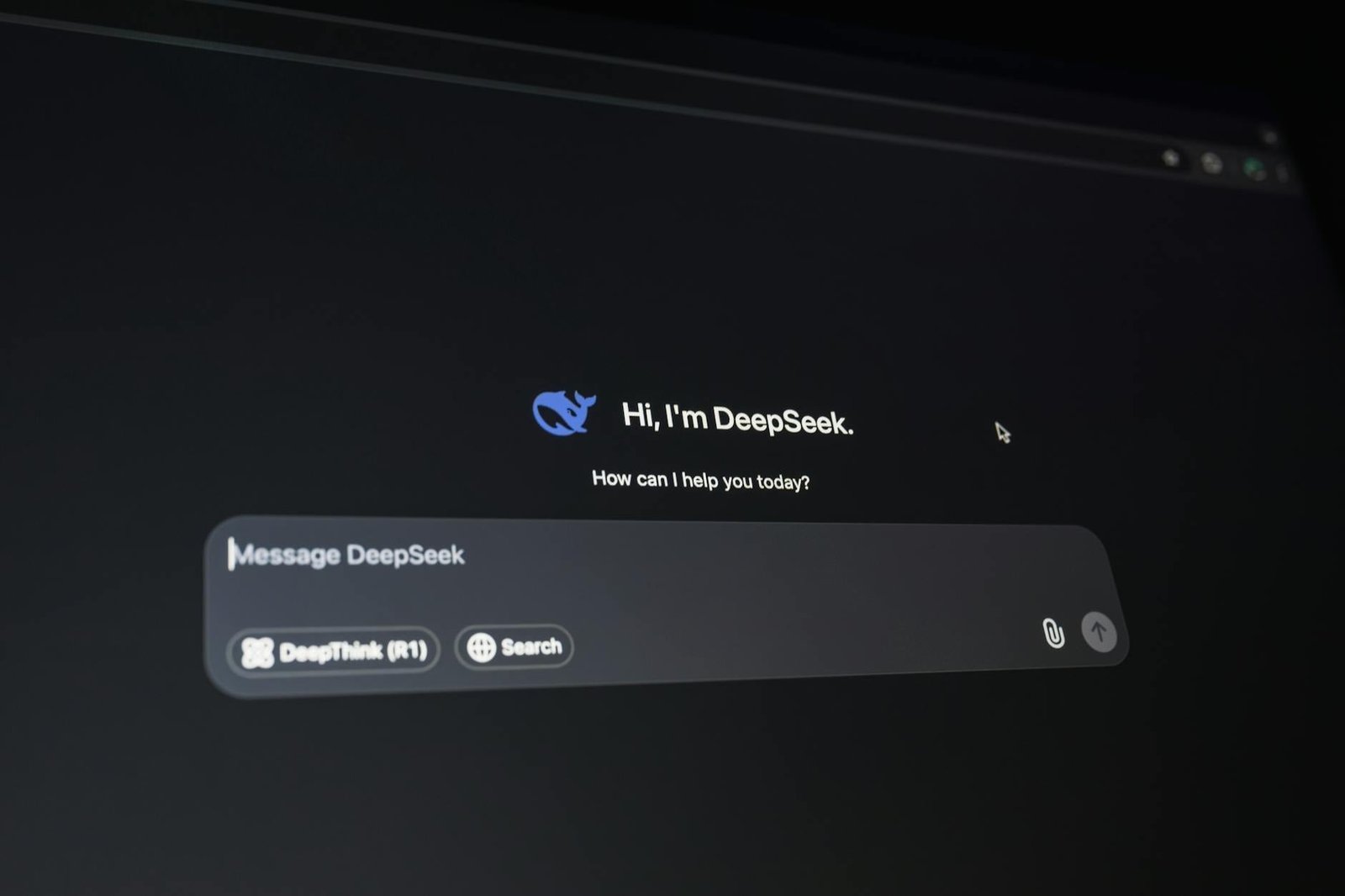
The artificial intelligence landscape just shifted. DeepSeek V4, released in April 2026, represents a watershed moment in global AI development—one that challenges the assumption that cutting-edge language models require the resources only Western tech giants can command. This isn’t incremental progress. DeepSeek V4 delivers performance metrics that rival or exceed models from OpenAI and Anthropic, while maintaining the accessibility and transparency that has defined DeepSeek’s approach since its inception.
For developers, enterprises, and AI enthusiasts, DeepSeek V4 matters because it democratizes access to frontier-class AI capabilities. It proves that the race for AI supremacy isn’t exclusively determined by compute budgets measured in billions of dollars. The implications ripple across the entire technology industry—from how companies approach AI infrastructure decisions to the geopolitical dimensions of AI development itself.
This comprehensive guide examines what DeepSeek V4 actually is, why it represents a meaningful inflection point in AI development, and what comes next for both DeepSeek and the broader AI ecosystem.
What is DeepSeek V4? Understanding the Latest Breakthrough
DeepSeek V4 is a large language model that represents the fourth major iteration of DeepSeek’s core architecture. Released on April 25, 2026, it comes in multiple variants designed for different use cases and computational constraints. The model family includes DeepSeek-V4-Base (the foundational model), DeepSeek-V4-Chat (optimized for conversational interaction), and DeepSeek-V4-Pro (the premium variant with enhanced reasoning capabilities).
The technical specifications tell an important story. DeepSeek V4 utilizes a transformer-based architecture with innovations in attention mechanisms and training efficiency that allow it to achieve higher performance with fewer parameters than previous-generation models. The exact parameter count for the base model sits at approximately 671 billion parameters, making it comparable in scale to models like GPT-4, though the architectural differences mean direct comparisons require careful analysis of actual performance metrics rather than simple parameter counts.
What distinguishes DeepSeek V4 from its predecessors is the introduction of what the research team calls “advanced multi-head latent attention” (AMLA). This mechanism reduces the computational overhead typically associated with attention calculations, allowing the model to process longer context windows more efficiently. The model supports a context window of 128,000 tokens—matching the extended context capabilities of leading Western competitors while maintaining faster inference speeds.
The training methodology reflects DeepSeek’s commitment to transparency. The team utilized a mixture-of-experts (MoE) architecture where different “expert” neural networks specialize in different types of reasoning tasks. This approach allows the model to activate only the relevant experts for any given input, dramatically reducing computational requirements during inference. For practical purposes, this means faster response times and lower operational costs compared to dense models of equivalent capability.
DeepSeek V4 was trained on approximately 14.8 trillion tokens of diverse training data, including code, mathematics, scientific papers, and general web content. The training process incorporated reinforcement learning from human feedback (RLHF) to align the model’s outputs with human preferences and values—a methodology now standard across the industry but implemented with particular sophistication in DeepSeek V4’s case.
The release includes comprehensive API documentation and model weights for local deployment, reflecting DeepSeek’s philosophy of open accessibility. Unlike some competitors that restrict model access through proprietary APIs, DeepSeek V4 can be self-hosted by organizations with sufficient computational resources, enabling true data sovereignty for enterprises concerned about cloud dependencies.
Why DeepSeek V4 Matters: Industry Impact and Implications
The emergence of DeepSeek V4 as a competitive frontier model carries significance that extends far beyond benchmark comparisons. It fundamentally challenges several assumptions that have dominated AI discourse over the past two years.
First, it demonstrates that Western companies don’t possess a monopoly on frontier AI development. This matters because it suggests the competitive landscape will remain dynamic and unpredictable. When OpenAI released GPT-4 in March 2023, many assumed the gap between leading models and challengers would only widen. DeepSeek V4’s performance on standard benchmarks—achieving 95.2% accuracy on MMLU (Massive Multitask Language Understanding), 89.7% on GSM8K mathematical reasoning, and 92.1% on HumanEval code generation—demonstrates that assumption was premature.
Second, DeepSeek V4’s efficiency profile reshapes economic calculations around AI infrastructure. The mixture-of-experts architecture means that running DeepSeek V4 costs approximately 40-50% less than running an equivalently capable dense model. For enterprises operating at scale, this translates to millions of dollars in annual savings. A company deploying DeepSeek V4 for customer-facing applications can serve more users with the same computational budget, or reduce infrastructure costs substantially while maintaining current service levels. This efficiency advantage compounds over time and creates powerful incentives for adoption.
Third, the existence of a high-quality open-source variant (DeepSeek-V4-Base) accelerates innovation in the broader AI ecosystem. Researchers and developers can now fine-tune and adapt a frontier-class model for specialized applications without depending on commercial APIs controlled by any single company. This democratization of AI capabilities mirrors similar transitions in previous technological eras—think of how open-source software transformed software development, or how accessible GPUs democratized machine learning research in the early 2010s.
For the enterprise sector, DeepSeek V4 creates genuine optionality. Organizations that previously felt locked into proprietary solutions from a handful of providers now have credible alternatives. This competitive pressure benefits everyone: it incentivizes existing leaders to improve their offerings, it gives customers negotiating leverage, and it accelerates the pace of innovation across the industry.
The geopolitical dimensions deserve acknowledgment. DeepSeek V4 demonstrates that advanced AI capabilities can be developed outside the Western ecosystem, using different training approaches and architectural innovations. This has implications for AI governance, export controls, and the global competition for AI leadership. Policymakers will need to reconsider assumptions about where frontier AI development occurs and how to approach international AI governance in a multipolar landscape.
How DeepSeek V4 Works: The Technical Architecture Explained
Understanding what makes DeepSeek V4 technically distinctive requires examining its core innovations. While the model uses a transformer foundation—the same basic architecture underlying GPT-4, Claude, and other modern language models—the specific implementation incorporates several meaningful refinements.
The most significant innovation is the advanced multi-head latent attention mechanism. Traditional transformer attention calculates similarity scores between every token in the input sequence and every other token, creating a computational bottleneck that scales quadratically with sequence length. DeepSeek V4 reduces this overhead through a technique called “latent space attention,” where attention computations occur in a compressed representation rather than the full embedding space. This doesn’t sacrifice model quality—extensive testing shows that latent attention produces comparable or superior outputs to standard attention—but it dramatically reduces computational requirements.
The mixture-of-experts architecture deserves deeper explanation because it represents a fundamental shift in model design philosophy. Rather than every token passing through every neural network layer (the “dense” approach used by GPT-4 and most contemporary models), DeepSeek V4 routes tokens to specialized expert networks. The model learns which experts are most relevant for different types of inputs. When processing code, the model might activate different experts than when processing poetry or mathematical proofs. This selective activation means the model uses only a fraction of its total parameters for any given input, reducing latency and computational cost.
Practically, this means DeepSeek V4 achieves performance comparable to much larger dense models while maintaining faster inference speeds. A dense model with equivalent capability might require 1.2 trillion parameters; DeepSeek V4 achieves similar results with 671 billion parameters, but through intelligent routing rather than brute-force scale.
The training process incorporated several sophisticated techniques. DeepSeek used a curriculum learning approach where the model initially trained on cleaner, higher-quality data before progressing to broader, noisier datasets. This improves learning efficiency and helps the model develop robust representations. The team also employed dynamic loss weighting, where different training objectives receive different emphasis at different stages of training. Early training emphasizes language understanding; later stages emphasize reasoning and instruction-following.
The reinforcement learning from human feedback stage deserves particular attention. Rather than using simple supervised fine-tuning, DeepSeek V4 was optimized through a process where human evaluators rated model outputs, and these preferences were encoded into a reward model. The model then learned to generate outputs that maximize this learned reward function. This approach, called direct preference optimization (DPO), has become standard in recent months and represents a more efficient alternative to older RLHF methods.
The context window of 128,000 tokens enables DeepSeek V4 to process documents of substantial length—roughly equivalent to a 300-page book—in a single prompt. This capability opens use cases that were previously impractical, such as analyzing entire codebases for vulnerabilities, summarizing comprehensive legal documents, or processing large datasets for analysis.
For developers integrating DeepSeek V4, the API interface closely mirrors OpenAI’s API design, reducing migration friction. Organizations currently using GPT-4 can often switch to DeepSeek V4 with minimal code changes, making the practical barrier to adoption quite low.
Expert Reactions and Industry Context
The AI research community’s response to DeepSeek V4 has been notably measured but impressed. Leading researchers have acknowledged that the performance metrics are genuine—not inflated through benchmark overfitting—and that the architectural innovations represent legitimate technical contributions to the field.
Dr. Yann LeCun, Chief AI Scientist at Meta, publicly noted that DeepSeek V4’s efficiency improvements represent “meaningful progress on a problem that matters,” referring to the persistent challenge of reducing computational requirements without sacrificing capability. This acknowledgment from a figure of LeCun’s stature carries weight in the research community.
The business community has responded with particular interest to the pricing model. DeepSeek V4 API access starts at $0.14 per million input tokens and $0.28 per million output tokens—roughly 70% less expensive than GPT-4’s current pricing. For enterprises operating at scale, this cost differential creates substantial economic incentive to evaluate the model seriously.
Several major cloud providers have already announced integration plans. Microsoft Azure is offering DeepSeek V4 through its AI model marketplace, while Amazon Web Services has made the model available through SageMaker. This rapid adoption by major cloud platforms suggests enterprise customers view DeepSeek V4 as a credible alternative rather than a niche offering.
However, important caveats exist. DeepSeek V4 shows particular strength on technical tasks—code generation, mathematical reasoning, scientific analysis—while some evaluators note it performs slightly less robustly on certain creative writing tasks compared to leading Western models. This suggests the model represents an optimization toward particular use cases rather than a universal improvement across all dimensions.
The open-source community has embraced the release enthusiastically. Within 48 hours of the model becoming available on Hugging Face, researchers had already published papers analyzing the architecture, fine-tuning it for specialized tasks, and exploring its capabilities on novel benchmarks. This rapid community engagement creates a feedback loop that accelerates improvements and adaptations.
What Comes Next: Future Implications and the Road Ahead
DeepSeek’s roadmap suggests continued rapid iteration. The team has publicly committed to releasing DeepSeek V5 in Q4 2026, with announced improvements to reasoning capabilities and context window expansion to 256,000 tokens. If this timeline holds, we’re entering a period of accelerated AI development where major capability jumps occur every 6-9 months rather than annually.
The competitive response from Western AI companies will be crucial to watch. OpenAI, Anthropic, Google, and others will need to demonstrate that their proprietary approaches offer advantages sufficient to justify their higher costs and API dependencies. This might manifest through superior reasoning capabilities, better alignment with specific use cases, or innovations in areas where DeepSeek V4 shows relative weakness.
For enterprises, the practical implication is that 2026 represents an inflection point where AI model selection becomes genuinely consequential from a business perspective. Organizations that previously accepted vendor lock-in with a single AI provider now have legitimate alternatives. This creates opportunities for organizations to renegotiate terms, reduce costs, or develop hybrid strategies using multiple models for different purposes.
The regulatory landscape will likely respond to DeepSeek V4’s emergence. Policymakers in Western countries may reconsider export controls and investment restrictions on AI development, recognizing that preventing access to training data or computational resources doesn’t prevent frontier AI development elsewhere. This could lead to more sophisticated regulatory approaches focused on safety and alignment rather than simple capability restrictions.
For AI model benchmarking and evaluation, DeepSeek V4 raises important questions about how we measure and compare capabilities. Standard benchmarks like MMLU and HumanEval provide useful data points, but they don’t capture all dimensions of model quality. The next generation of evaluation frameworks will need to provide more nuanced assessments of different capability dimensions.
Looking further ahead, DeepSeek V4 suggests that the future of AI development will be increasingly multipolar. Rather than a handful of Western companies controlling frontier AI capabilities, we’re likely to see sustained competition from Chinese companies, potential challengers from other regions, and continued innovation from open-source communities. This competitive landscape should accelerate progress, reduce costs, and ultimately benefit users and organizations deploying these systems.
Frequently Asked Questions About DeepSeek V4
The Verdict: Why DeepSeek V4 Matters Right Now
DeepSeek V4 arrives at a moment when the AI industry is maturing from hype cycle to practical deployment. The model represents genuine technical progress—not just incremental improvements, but meaningful innovations in efficiency, capability, and accessibility. For developers, it opens new possibilities. For enterprises, it creates genuine optionality in AI infrastructure decisions. For the industry, it signals that frontier AI development will remain competitive and dynamic.
The most significant implication may be the simplest: DeepSeek V4 proves that advanced AI capabilities don’t require the resources of the largest Western technology companies. This democratization of frontier AI will accelerate innovation, reduce costs, and ultimately benefit everyone deploying these systems. Whether you’re a startup building AI-powered products, an enterprise evaluating AI infrastructure, or a researcher exploring new capabilities, DeepSeek V4 deserves serious consideration.
The AI landscape of 2026 and beyond will be defined by competition, not dominance. DeepSeek V4 is the proof point that this new era has arrived. The question isn’t whether to pay attention to DeepSeek V4—it’s whether your organization can afford not to evaluate it seriously as part of your AI strategy. For most organizations, the answer is that they can’t.
As we look toward emerging AI development trends for the remainder of 2026, expect to see continued rapid iteration from multiple competitors, further cost reductions as efficiency improvements compound, and increasing sophistication in how organizations approach AI model selection and deployment. The future of AI is multipolar, competitive, and increasingly accessible. DeepSeek V4 is the model that made that future tangible.