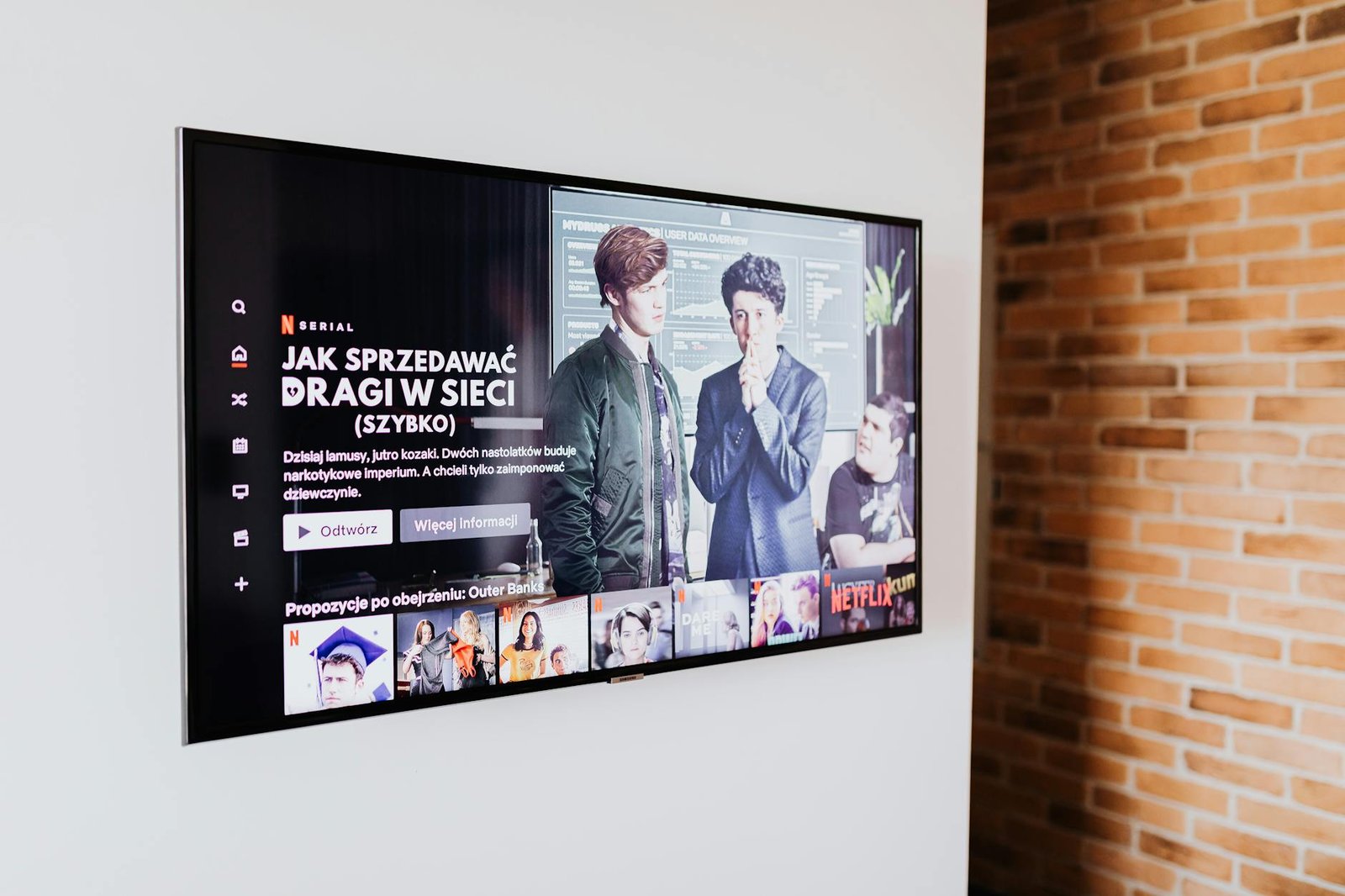
As someone who has been covering the slow-motion collision between traditional broadcasting and Big Tech for years, this story hit differently when I first read about it. The moment I saw the scale of the coalition pushing back — broadcasters from across the globe, not just one or two disgruntled networks — I knew this wasn’t just another industry grumble. What caught my attention here was how the smart TV, that innocuous black rectangle sitting in your living room, has quietly become one of the most contested pieces of real estate in the entire tech ecosystem. This is the story I’ve been waiting to write, because it finally lays bare a power struggle that affects every single person who turns on a television.
Key Takeaways
- A major global coalition of broadcasters is formally calling on the European Union to impose stricter regulations on Big Tech companies controlling smart TV platforms.
- Companies including Google, Amazon, Apple, and Samsung are at the center of the dispute over who controls content discovery, default apps, and home screen real estate on smart televisions.
- Broadcasters argue that current EU rules under the Digital Markets Act do not go far enough to protect public interest media and local content providers.
- The outcome of this regulatory push could reshape how hundreds of millions of European households access television content within the next few years.
- Consumers could see significant changes to their smart TV interfaces, default streaming options, and channel prominence depending on how the EU responds.
What Happened
The worlds broadcasters urge tighten campaign reached a critical new milestone in March 2026, as an unprecedented international alliance of television broadcasters formally submitted demands to European Union regulators calling for significantly stronger oversight of the technology giants that control smart TV operating systems and platforms. The coalition, which spans public and commercial broadcasters from dozens of countries across Europe and beyond, argues that companies like Google, Amazon, Apple, and Samsung have leveraged their dominance over smart TV ecosystems to systematically disadvantage traditional broadcasters in favor of their own streaming services and commercial partners.
At the heart of the complaint is a straightforward but deeply consequential issue: when you turn on your smart TV, what you see first — and what you can easily find — is increasingly determined not by your preferences or by public interest obligations, but by commercial agreements struck between device manufacturers and streaming giants. Broadcasters say this constitutes a form of digital gatekeeping that threatens the visibility of licensed, regulated, public-interest content, and they want the EU to act decisively to fix it.
The formal push was submitted ahead of key EU reviews of the Digital Markets Act (DMA), the landmark legislation designed to rein in Big Tech platform power. Broadcasters are specifically asking for smart TV platforms to be designated as “gatekeepers” under the DMA, a legal classification that would impose strict interoperability, prominence, and fairness obligations on their operators.
Why Worlds Broadcasters Urge Tighten EU Rules Now
The timing of this campaign is not accidental. Smart television adoption has accelerated dramatically over the past five years, with industry research indicating that more than 70 percent of all televisions sold in Europe today are internet-connected smart TVs. That figure represents a fundamental shift in how content reaches audiences — and, crucially, who controls that journey.
For decades, broadcasters operated in a relatively level playing field defined by broadcast spectrum allocation and must-carry rules that guaranteed their channels appeared on cable and satellite platforms. The transition to IP-delivered content over smart TV operating systems has effectively dismantled those protections. There is no equivalent “must-carry” framework governing what appears on a Google TV home screen or an Amazon Fire TV interface, and broadcasters say this regulatory gap is being ruthlessly exploited.
Industry analysts note that the revenue implications are enormous. Streaming platforms reportedly charge content providers significant fees for premium placement on smart TV home screens — in some cases, placement deals can run into tens of millions of euros annually for prominent positioning. For commercial broadcasters with their own streaming apps, this creates a pay-to-play dynamic that smaller national broadcasters simply cannot afford to compete with. For public service broadcasters, it raises fundamental questions about whether publicly funded content can reach the audiences it was created to serve.
The European Broadcasting Union, which represents public broadcasters across 56 countries, has been particularly vocal, noting that in user testing studies, viewers who could not easily locate their national public broadcaster’s app on a smart TV were significantly less likely to seek it out at all. Discoverability, in the streaming age, is essentially equivalent to existence.
The Bigger Picture: Smart TVs as Gatekeepers
To understand why this dispute matters so much, it helps to appreciate just how thoroughly the smart TV market has been captured by a handful of powerful platforms. Google TV and Android TV power a significant proportion of smart televisions sold globally, appearing on sets from Sony, TCL, Hisense, and many other manufacturers. Amazon’s Fire TV platform dominates in certain markets. Apple TV OS controls the premium end of the market through Apple TV devices and integration deals. Samsung’s Tizen OS and LG’s webOS between them account for a substantial share of the premium television segment in Europe.
What this means in practice is that the operating system layer sitting between a viewer and their content is controlled by companies whose primary business interests are in selling their own streaming subscriptions, advertising inventory, and app store revenues. Google wants you to use YouTube Premium. Amazon wants you to subscribe to Prime Video. Apple wants you on Apple TV+. The incentive to promote competing broadcast apps — especially free, ad-supported public broadcasters — is essentially zero.
The Digital Markets Act, which came into force in 2022 and began applying to designated gatekeepers in 2023, was designed to address exactly this kind of structural conflict of interest. However, broadcasters argue that the DMA’s current scope does not explicitly cover smart TV operating systems as standalone gatekeeper services, creating a loophole that allows platform operators to continue exercising disproportionate control over content discovery without meaningful regulatory accountability. The Digital Markets Act represents the EU’s most ambitious attempt yet to regulate platform power, but critics say it needs updating to keep pace with hardware-level gatekeeping.
What Experts Are Saying
Media policy researchers and digital rights advocates have broadly welcomed the broadcasters’ campaign, though some caution that the regulatory path ahead is neither simple nor swift. Industry analysts note that the EU’s track record on DMA enforcement has been encouraging but slow, with formal proceedings against major platforms taking months or years to produce binding outcomes.
What this means for users in the near term is likely very little change — the regulatory machinery of Brussels moves deliberately, and even if the European Commission agrees to extend DMA gatekeeper designations to smart TV platforms, the practical implementation of new prominence and interoperability rules could take until 2028 or beyond to materialize in any meaningful way on consumers’ actual television screens.
Some analysts have pointed to the precedent set by the EU’s earlier action on mobile operating systems, where rules requiring browser choice screens and third-party app store access on iOS and Android were eventually implemented following sustained regulatory pressure. A similar model applied to smart TVs could, in theory, require platforms to present users with a neutral content discovery interface rather than one curated to favor the platform operator’s commercial interests.
Representatives from the technology companies named in the broadcasters’ complaint have pushed back, arguing that their platforms invest heavily in content discovery tools, that broadcaster apps are freely available in their app stores, and that consumers benefit from the curation and recommendation systems they have built. Google, in particular, has argued that Google TV’s interface is designed to surface content users actually want, regardless of its source. Critics counter that the definition of “what users want” is heavily shaped by what platforms choose to make prominent in the first place — a circular argument that regulators will need to untangle carefully.
You can read more about the broadcasters’ full demands and the EU’s response in the original reporting from The Guardian.
Key Players and Their Platform Control
| Platform | Owner | Market Presence | Primary Commercial Interest | DMA Gatekeeper Status |
|---|---|---|---|---|
| Google TV / Android TV | Google (Alphabet) | Very High — Sony, TCL, Hisense | YouTube, Google advertising | Designated (mobile OS); TV disputed |
| Fire TV | Amazon | High — Fire TV sticks, select sets | Prime Video, Amazon advertising | Under review |
| Apple TV OS | Apple | Premium segment, Apple TV devices | Apple TV+, App Store revenue | Designated (iOS); TV disputed |
| Tizen OS | Samsung | Very High — Samsung TVs globally | Samsung TV Plus, ad revenue | Not yet designated |
| webOS | LG Electronics | High — LG TVs globally | LG Channels, advertising | Not yet designated |
What This Means for Consumers
For the average person watching television in Europe, the immediate practical impact of this regulatory battle is largely invisible — but the long-term stakes are significant. If broadcasters succeed in their push to have smart TV platforms designated as DMA gatekeepers, consumers could eventually benefit from more neutral, user-controlled home screens that prioritize their actual viewing preferences rather than the platform’s commercial agenda.
In practice, this could mean your national public broadcaster’s catch-up app appearing prominently by default, rather than being buried three pages deep in an app store. It could mean content recommendation algorithms that surface programmes based on what you watch rather than what a streaming service has paid to promote. It could mean genuine interoperability between different streaming services, making it easier to search across platforms without being funneled toward any single provider’s catalogue.
There is also a subtler but important dimension around media plurality and democratic information access. Public service broadcasters play a constitutionally recognized role in many European countries as providers of independent, verified news and public interest content. When platform design choices systematically reduce the visibility of those broadcasters — even unintentionally — the downstream effects on informed citizenship are real and measurable. Research from media studies institutions has found that younger viewers who primarily access content through algorithm-driven smart TV interfaces are significantly less likely to encounter news and current affairs programming than those who use traditional broadcast schedules.
Check out some of the leading smart TV platforms currently available if you want to understand the hardware at the center of this debate:
As an Amazon Associate, I earn from qualifying purchases.
- Google TV Smart Televisions — See the latest sets running the platform at the center of broadcaster complaints
- Amazon Fire TV Stick Devices — The streaming sticks that bring Amazon’s platform to any screen
- Samsung Tizen Smart TVs — Samsung’s own OS-powered televisions under regulatory scrutiny
- Apple TV 4K Streaming Devices — Apple’s hardware gateway to its own platform ecosystem
For more on how streaming platforms are reshaping home entertainment, see our coverage of the streaming wars and what they mean for cord-cutters and our analysis of how the Digital Markets Act is changing Big Tech in Europe.
What Comes Next: The Worlds Broadcasters Urge Tighten Agenda
The immediate next step is in Brussels. The European Commission is expected to respond to the broadcasters’ formal submission as part of its ongoing review of DMA scope and enforcement priorities. Industry observers are watching closely to see whether the Commission will open a formal investigation into smart TV platform practices or whether it will defer action pending further market studies — a process that could add another 12 to 18 months of delay.
Parallel to the EU process, several individual member states are reportedly considering national-level action. France and Germany, both home to powerful public broadcasting institutions, have historically been willing to move faster than EU-wide consensus allows, and either could introduce national prominence rules for smart TV platforms that create immediate pressure even before EU-level regulation catches up.
The technology companies themselves are not standing still. Google has reportedly been in quiet dialogue with several European broadcasters about enhanced prominence agreements, and Amazon has made moves to improve the discoverability of free-to-air broadcast apps on Fire TV in certain markets. Whether these moves represent genuine concessions or strategic positioning ahead of regulatory action is a matter of debate — but they signal that the platforms are taking the political pressure seriously.
What to watch for in the coming months: the European Commission’s formal response to the DMA extension request, any unilateral national regulatory actions in France or Germany, and whether any of the major platform operators make significant voluntary changes to their smart TV interfaces ahead of a regulatory deadline. The smart TV home screen may look like a simple piece of software, but it has become one of the most consequential battlegrounds in the future of media. The worlds broadcasters urge tighten campaign has ensured that battle is now firmly on the EU’s agenda — and the outcome will shape what Europeans watch, and how they find it, for decades to come.
For broader context on how hardware and software intersect in today’s media landscape, don’t miss our deep dive into the future of smart home devices and connected entertainment.
Frequently Asked Questions
What is the Digital Markets Act and how does it relate to smart TVs?
The Digital Markets Act is a major piece of European Union legislation designed to prevent large technology companies from abusing their dominant market positions. It designates certain platforms as “gatekeepers” and imposes strict fairness, interoperability, and transparency obligations on them. Broadcasters are now pushing for smart TV operating systems to be formally designated as gatekeepers under the DMA, which would force those companies to give broadcasters fairer access and visibility on their platforms.
How does Big Tech control what you see on your smart TV?
Smart TV operating systems like Google TV, Amazon Fire TV, Apple TV OS, Samsung Tizen, and LG webOS control the home screen interface, content recommendation algorithms, default app layouts, and search results that viewers see when they turn on their television. Platform owners can promote their own streaming services and paid partners more prominently than competing apps, giving them significant power over content discovery and audience reach.
When will EU smart TV regulations change following the broadcaster campaign?
The timeline for regulatory change is uncertain. The European Commission must first respond to formal submissions, potentially open investigations, consult stakeholders, and draft new rules. Industry analysts suggest meaningful regulatory change affecting smart TV platform practices is unlikely before 2028 at the earliest, though individual EU member states may act faster through national legislation.
What does the broadcaster vs Big Tech smart TV battle mean for ordinary viewers?
For everyday viewers, a successful broadcaster campaign could eventually mean smarter, more neutral smart TV home screens that prioritize your actual preferences over commercial deals. You might see your national broadcaster’s app more prominently displayed by default, better cross-platform search, and less algorithmic nudging toward paid streaming subscriptions. In the near term, most viewers are unlikely to notice changes while the regulatory process plays out.