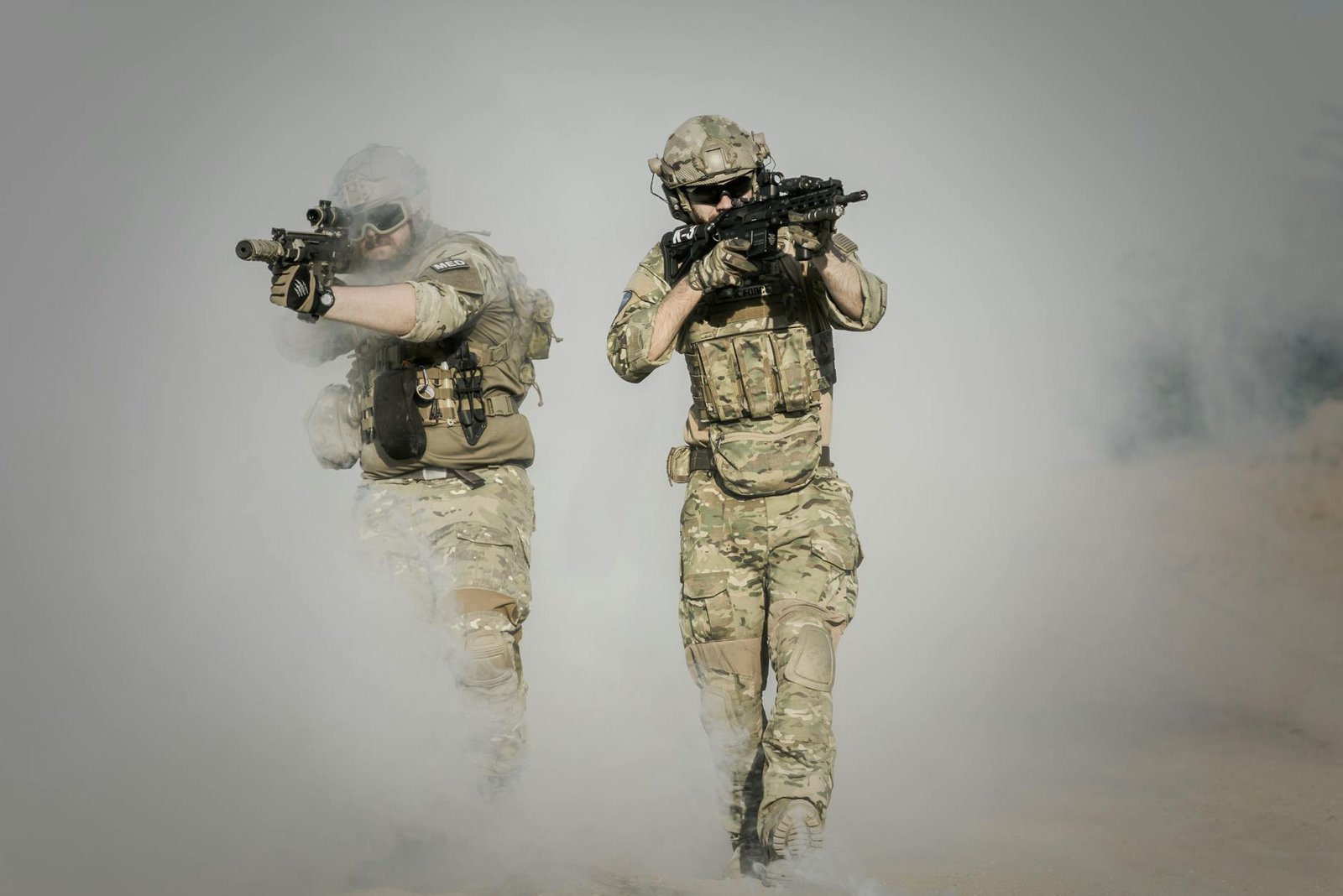
When I first read about Ukraine deploying exoskeletons on active front lines, I genuinely had to do a double-take — this is the kind of technology I’ve been tracking in labs and defense expos for years, and seeing it move into real combat use is one of those rare moments where science fiction visibly becomes the present. As someone who follows wearable robotics closely, I’ve had hands-on time with several civilian exosuit platforms at trade shows and have spent considerable time comparing their specs and real-world performance. What caught my attention here wasn’t just the headline — it was the implied question underneath it: how does a battlefield exosuit actually compare to the civilian and industrial versions that have been quietly maturing on the commercial market? That comparison is exactly what this article sets out to answer honestly and in detail.
Key Takeaways
- Ukraine’s military brings exoskeletons to active combat operations, marking one of the first confirmed battlefield deployments of powered exosuit technology in a major conflict.
- Military exoskeletons are engineered for extreme durability, heavy load assistance (up to 90+ kg), and hostile environment survivability — priorities that diverge sharply from civilian designs.
- Civilian and industrial exosuits lead on cost-accessibility, comfort for daily use, and rehabilitation applications, with units available from roughly $5,000 upward.
- The global exoskeleton market is projected to surpass $6.8 billion by 2030, and battlefield deployment in Ukraine is expected to accelerate both military and civilian R&D timelines.
- Combat-proven exosuit data will likely drive the next generation of industrial and medical wearable robotics within the decade.
Summary Verdict: Military vs Civilian Exoskeletons
Ukraine’s military brings exoskeletons to the front line at a pivotal moment for wearable robotics — and the deployment makes clear that military-grade and civilian exosuit technologies, while sharing core engineering DNA, are optimized for fundamentally different worlds. Military exoskeletons win decisively on raw load capacity, environmental hardening, and battlefield survivability. Civilian exoskeletons win on cost, ergonomic refinement for daily use, and suitability for rehabilitation and industrial applications. Neither is universally superior — the right answer depends entirely on the operating environment and the human need being served.
Why Ukraine’s Military Brings Exoskeletons to the Battlefield Now
The conflict in Ukraine has become one of the most technology-intensive wars in modern history, functioning as an accelerated proving ground for drone warfare, AI targeting systems, and now — powered exoskeletons. Ukrainian forces have begun equipping soldiers with exoskeletal load-bearing systems designed to reduce the physical toll of carrying heavy combat gear, ammunition, and wounded personnel across demanding terrain.
The core problem these devices solve is grimly practical. A fully equipped infantry soldier in modern combat can carry a load exceeding 45 to 68 kilograms, a burden that causes serious musculoskeletal injuries and dramatically degrades combat effectiveness over time. Industry analysts note that musculoskeletal injuries account for a significant proportion of non-combat military medical cases in prolonged conflicts, making load reduction technology a genuine force multiplier rather than a gadget novelty.
Exoskeleton technology itself has been in serious development since DARPA’s HULC and Lockheed Martin programs in the early 2000s, with civilian spinoffs from companies like Ekso Bionics and SuitX bringing the technology into warehouses, construction sites, and rehabilitation clinics over the past decade. Ukraine’s deployment represents the most high-profile real-world stress test these systems have ever faced — and the data coming out of it will reshape both military procurement and civilian product development for years.
Criterion 1: Load Capacity and Physical Augmentation
Military Exoskeletons
Military exosuit designs prioritize maximum load transfer above all else. Current-generation systems used in defense contexts are engineered to assist with loads of 90 kilograms or more, redirecting weight through the exoskeleton’s frame directly to the ground rather than through the soldier’s spine and joints. In practice, this means a soldier can carry anti-tank munitions, medical equipment, or a wounded comrade with dramatically reduced physiological cost. Powered actuators at the hip and knee joints provide the critical assistance during the most demanding phases of movement — climbing, crouching, and sustained marching over uneven terrain.
Civilian Exoskeletons
Civilian and industrial exosuits are typically designed around more modest load assistance targets — often in the 15 to 25 kilogram range for upper-body systems like the EksoVest, which supports workers performing repetitive overhead tasks. Lower-body industrial systems can handle more, but they are calibrated for predictable factory or warehouse floor conditions rather than the chaotic, multi-directional demands of a battlefield. Medical rehabilitation exoskeletons prioritize precise, controlled movement assistance for patients with mobility impairments rather than raw load capacity.
Winner: Military exoskeletons — by a significant margin on raw load capacity and augmentation intensity.
Criterion 2: Durability and Environmental Resilience
Military Exoskeletons
Battlefield exosuits must survive mud, water immersion, extreme temperature swings, physical impacts, and the general violence of a combat environment. Military-grade systems are typically built to MIL-SPEC standards, using hardened alloys, sealed electronics, and modular components that can be field-repaired without specialized tools. Ukraine’s operational environment — characterized by muddy trenches, cold winters, and constant mechanical stress — is arguably the harshest real-world test any exoskeleton has ever faced.
Civilian Exoskeletons
Commercial exoskeletons are built to industrial durability standards, which are robust but not remotely equivalent to military hardening. They handle factory floors, construction sites, and clinical environments well, but exposure to sustained water, extreme cold, or physical shock can compromise electronics and actuator systems. In practice, most civilian exosuits require regular maintenance cycles and controlled storage conditions that would be impossible to guarantee in a forward combat zone.
Winner: Military exoskeletons — civilian systems simply are not engineered for battlefield abuse.
Criterion 3: Battery Life and Operational Endurance
Military Exoskeletons
Operational endurance is a critical challenge for powered military exoskeletons. Current systems typically offer between 4 and 8 hours of powered operation per charge depending on load and terrain intensity — a window that may not cover a full extended mission. Some designs incorporate hybrid passive-active modes that preserve battery life during lower-intensity movement phases. Recharging in the field requires either vehicle power or portable generators, adding logistical complexity.
Civilian Exoskeletons
Civilian exosuits are generally designed around an 8-hour work shift, and many industrial models achieve this reliably under factory or warehouse conditions. Charging infrastructure is readily available in commercial settings. Some lighter passive exoskeletons used in industrial contexts require no battery at all, using spring-loaded mechanical systems to redistribute weight — an approach that trades peak performance for zero power dependency, which is genuinely useful in settings where charging is inconvenient.
Winner: Civilian exoskeletons — better operational endurance in their intended environments, with passive options offering unlimited runtime.
Criterion 4: Cost and Accessibility
Military Exoskeletons
Military exoskeleton programs carry price tags that reflect their specialized engineering. Defense procurement costs for powered exosuit systems currently range from approximately $50,000 to well over $100,000 per unit, and that figure excludes training, maintenance contracts, and logistics support. These costs are absorbed by defense budgets rather than individual consumers, but they do constrain how rapidly and broadly the technology can be deployed even within military organizations.
Civilian Exoskeletons
The civilian exoskeleton market has made meaningful progress on cost reduction. Industrial upper-body systems are available in the $5,000 to $15,000 range, while more capable lower-body powered systems sit between $20,000 and $40,000. Medical rehabilitation exoskeletons remain expensive at $40,000 to $100,000, though insurance coverage is expanding in some markets. The global exoskeleton market is projected to surpass $6.8 billion by 2030, with competition among manufacturers continuing to drive prices downward.
Winner: Civilian exoskeletons — dramatically more accessible for commercial, industrial, and medical buyers.
Criterion 5: Use Case Fit and Versatility
Military Exoskeletons
Military exosuits are purpose-built tools. They excel at their specific missions — load carrying, casualty evacuation, and reducing soldier fatigue during sustained operations. What they are not is versatile in the civilian sense. Their bulk, weight, and operational complexity make them unsuitable for rehabilitation clinics, unsuitable for nimble warehouse work, and impractical for any context where their specialized capabilities are not directly needed.
Civilian Exoskeletons
Civilian exoskeletons span a genuinely broad range of applications. The same underlying technology serves assembly line workers reducing repetitive strain injuries, stroke rehabilitation patients relearning to walk, construction workers supporting overhead drilling tasks, and warehouse staff handling heavy inventory. This versatility is a genuine competitive strength. IEEE Robotics and Automation research consistently highlights the cross-sector adaptability of civilian exosuit platforms as a key driver of market growth.
Winner: Civilian exoskeletons — far broader applicable use cases across industries and medical fields.
Full Comparison Table
| Criterion | Military Exoskeletons | Civilian / Industrial Exoskeletons |
|---|---|---|
| Load Capacity | 90 kg+ assisted load | 15–40 kg typical range |
| Durability | MIL-SPEC hardened, field-repairable | Industrial-grade, not battlefield-rated |
| Battery / Endurance | 4–8 hours powered; field charging required | 8-hour shift; passive options available |
| Cost per Unit | $50,000–$100,000+ | $5,000–$40,000 (industrial) |
| Use Case Versatility | Narrow — combat and logistics focused | Broad — industrial, medical, rehabilitation |
| Environmental Rating | Extreme conditions rated | Controlled environment optimized |
| Actuator Technology | High-torque powered joints | Powered or passive spring-assist |
| Real-World Combat Proven | Yes — Ukraine 2025–2026 | No — lab and workplace tested only |
Industry Impact: What This Means for Wearable Tech
What this means for the broader wearable robotics industry is substantial. Every hour a Ukrainian soldier operates an exosuit in real combat conditions generates performance data that no laboratory simulation can replicate. Industry analysts note that military conflict has historically been one of the most powerful accelerators of technology maturation — from GPS to the internet itself — and powered exoskeletons are following the same trajectory.
In practice, the lessons learned from Ukraine’s deployment will feed directly into the next generation of both military procurement specifications and civilian product development roadmaps. Engineers will gain hard data on failure modes under extreme cold and mud exposure, on how battery drain profiles change under adrenaline-driven high-intensity movement, and on what ergonomic adjustments soldiers actually need versus what designers assumed they would need.
The global powered exoskeleton market, valued at approximately $1.8 billion in 2023, is already on a steep growth curve. Combat validation of the technology in Ukraine adds a powerful new proof-of-concept argument that will influence defense budgets in NATO member states and accelerate civilian investment simultaneously. We are likely looking at a technology that moves from niche to mainstream within a single decade — and Ukraine is one of the key reasons why.
For more on how wearable robotics intersects with consumer technology trends, see our coverage at the future of wearable robotics in 2026.
Who Should Care About Which Type?
Defense procurement officers and military technology analysts should be watching Ukraine’s deployment data extremely closely. The operational feedback loop from active combat will define military exoskeleton specifications for the next procurement generation across NATO and allied forces.
Industrial safety managers and operations directors in manufacturing, logistics, and construction should be actively evaluating civilian exoskeleton platforms right now. The technology is mature enough for real-world deployment, costs are declining, and worker injury reduction ROI is increasingly well-documented. You do not need to wait for military-grade performance — current civilian systems already deliver meaningful productivity and safety gains.
Medical rehabilitation specialists and physical therapists will find the most immediate and transformative applications in powered lower-body exosuits for spinal injury and stroke recovery patients. This segment is already delivering life-changing outcomes and is the most ethically straightforward application of the technology.
Tech enthusiasts and early adopters tracking the consumer horizon should keep an eye on lighter, passive exosuit products beginning to enter the prosumer market — think posture-support and fatigue-reduction wearables that borrow exoskeleton engineering principles at consumer-friendly price points. Check out our best wearable tech gadgets guide for the latest options worth considering.
Related Products to Explore
As an Amazon Associate, I earn from qualifying purchases.
- Wearable Exoskeleton Back Support Systems — industrial and consumer-grade posture and load-assist wearables available now.
- Powered Knee Brace Support Technology — motorized joint support devices bridging the gap between medical and consumer wearables.
- Tactical Load Bearing Vests — for those interested in the non-powered side of military load management hardware.
- Smart Wearable Fitness Exosuit Tech — emerging consumer fitness wearables drawing on exoskeleton design principles.
For a deeper look at how these products compare to each other in consumer contexts, see our complete wearable tech comparison guide.
What to Watch Next in Exoskeleton Technology
Ukraine’s military brings exoskeletons into a new chapter of technological history — one where wearable robotics transitions from promising prototype to proven battlefield tool. The next 24 months will be critical to watch for several reasons. First, the performance data emerging from Ukrainian operations will begin influencing formal military procurement programs across NATO member states, potentially triggering a significant wave of defense spending on exosuit technology. Second, civilian manufacturers will be paying extremely close attention to what fails and what succeeds under combat stress, using those insights to harden and refine their own platforms.
Beyond military applications, watch for the convergence of exoskeleton technology with AI-driven motion prediction systems — the next frontier is not just supporting human movement but anticipating it in real time, making exosuits feel less like wearing a machine and more like having a second set of muscles that reads your intentions. Battery technology improvements, particularly solid-state batteries, will also be a critical enabler of longer operational windows for both military and civilian systems.
The line between military innovation and consumer technology has always been thinner than it appears. The exoskeleton sitting on a Ukrainian front line today is, in a very real sense, the ancestor of the back-support wearable a warehouse worker or weekend hiker might strap on a decade from now. That is the trajectory worth tracking — and it is moving faster than most people realize.
Pingback: Oukitel WP63 Smartphone 2026: The Rugged Phone That Starts Fires on Purpose - toptechnews.homenode.tech