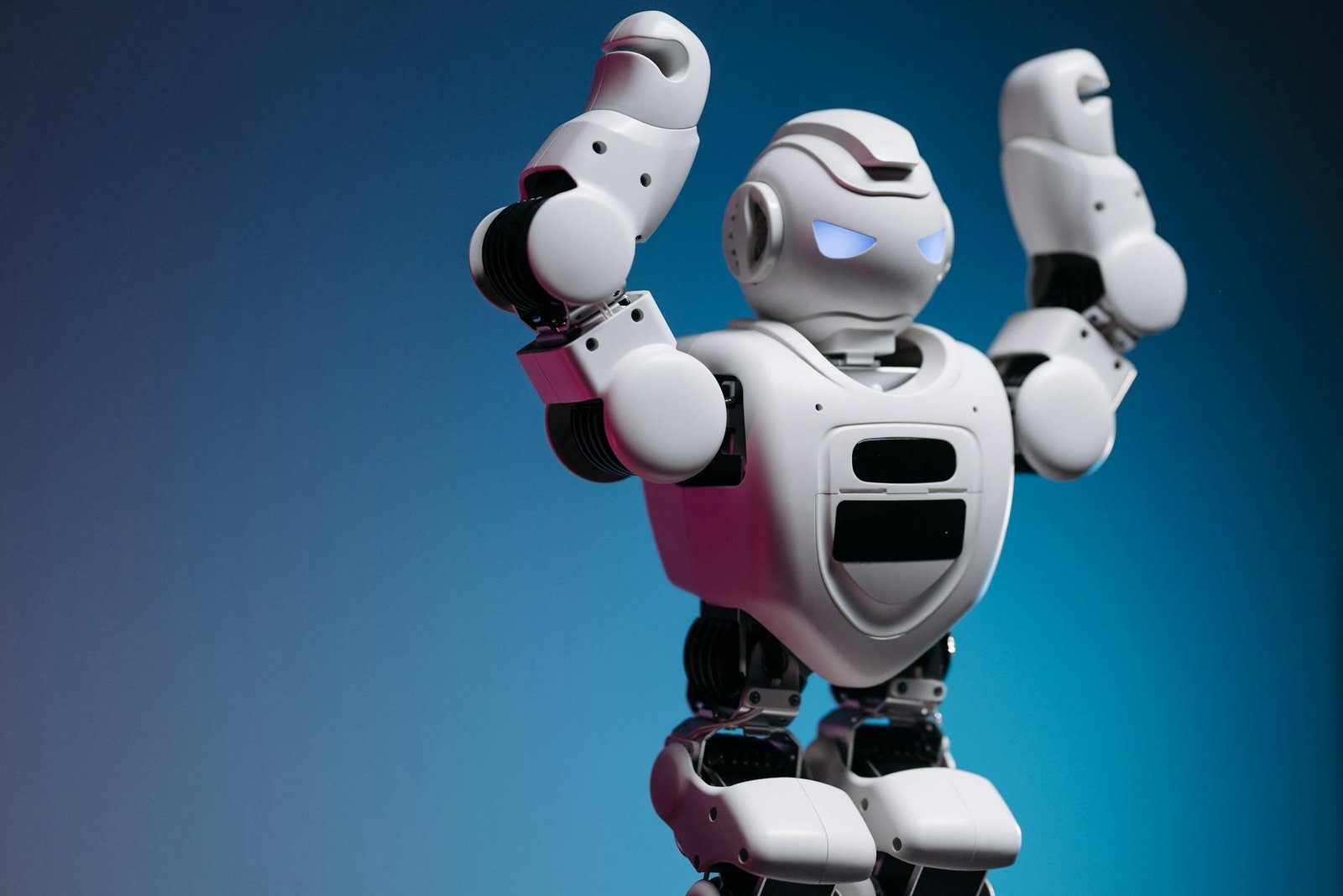
Key Takeaways
- Agility Robotics is deploying its humanoid Digit robot at Toyota’s Canadian manufacturing plant, marking a major commercial milestone for robotics in 2026.
- The U.S. manufacturing sector faces over 600,000 unfilled job openings, with an aging workforce accelerating the crisis.
- Humanoid robots are being positioned as gap-fillers for dangerous, repetitive roles — not as direct replacements for skilled human workers.
- The global humanoid robotics market is projected to surpass $38 billion by 2030, with 2026 emerging as the pivotal deployment year.
- Companies like GXO Logistics and Toyota are among the first major industrial players to integrate bipedal robots into live production environments.
The Quick Answer
Humanoid robots are no longer a science fiction concept — in robotics 2026, they are active participants on real factory floors. Agility Robotics has deployed its bipedal Digit robot at Toyota’s Canadian manufacturing plant to address a deepening labor shortage that is costing the manufacturing sector hundreds of billions of dollars annually. This is not about replacing workers; it’s about filling roles that have gone vacant for years and are becoming impossible to staff through traditional hiring alone.
The News: What’s Happening Right Now
Agility Robotics has officially moved beyond pilot programs. In early 2026, the company confirmed active deployment of its Digit humanoid robot inside Toyota’s Canadian manufacturing operation — one of the most significant real-world validations of bipedal robotics technology to date. This follows earlier deployments inside GXO Logistics facilities, where Digit has been handling tote movement and repetitive material transfer tasks that human workers find physically exhausting and injury-prone.
The timing is not accidental. North American manufacturing is in the grip of a structural labor crisis. Vacancy rates in production and assembly roles have remained stubbornly high for three consecutive years, and the pipeline of younger workers entering the skilled trades is narrowing at exactly the moment that baby boomer retirements are accelerating. For companies like Toyota — which operates some of the most precisely calibrated production lines in the world — even modest disruptions to staffing translate directly into output losses and supply chain delays.
Agility Robotics, backed by Amazon and operating out of its purpose-built RoboFab facility in Salem, Oregon, is betting that 2026 is the inflection point. The company has publicly stated its ambition to manufacture thousands of Digit units annually, a target that would have seemed wildly optimistic just two years ago but now looks increasingly credible given the pace of enterprise adoption.
Industry Context: Why the Labor Gap Is a Manufacturing Emergency
To understand why humanoid robots are suddenly everywhere in industrial conversations, you need to understand the scale of the workforce problem they are being asked to solve. The U.S. manufacturing sector alone is carrying more than 600,000 unfilled job openings as of early 2026, according to data from the Bureau of Labor Statistics. The Deloitte Manufacturing Institute projects that number could swell to 2.1 million unfilled positions by 2030 if current demographic and enrollment trends continue.
The problem is not simply that there aren’t enough workers — it’s that the workers who are available increasingly don’t want the jobs that need filling. Roles involving repetitive heavy lifting, exposure to extreme temperatures, night shifts in noisy environments, and high injury rates are seeing turnover figures that make traditional workforce planning almost impossible. Some facilities report annual turnover rates exceeding 80% in their most physically demanding positions. Hiring, onboarding, and training costs for those roles can run $5,000 to $10,000 per worker — costs that compound brutally when the average tenure is measured in months rather than years.
This is the gap that humanoid robots are designed to fill. Unlike traditional industrial robots — fixed-arm systems bolted to floors and programmed for a single task — humanoid robots like Digit are mobile, bipedal, and designed to operate in environments built for human bodies. They can navigate stairs, work in narrow aisles, use existing shelving systems, and adapt to layout changes without requiring expensive facility retrofits. That flexibility is the key commercial differentiator, and it’s why companies that previously dismissed humanoid robots as impractical are now signing deployment contracts.
The broader robotics market reflects this urgency. Global spending on industrial robotics is projected to reach $91 billion in 2026, up from $71 billion in 2023, according to the International Federation of Robotics. Within that, the humanoid segment — though still a fraction of the total — is the fastest-growing category, with a compound annual growth rate analysts estimate at over 40% through the end of the decade. For context on how automation is intersecting with broader workforce and economic questions, our analysis of the MIT study challenging the job apocalypse narrative offers important nuance on what the research actually shows about automation and employment.
Meet Digit: The Humanoid Robot Built for the Work Humans Won’t Do
Digit stands approximately 5 feet 9 inches tall, weighs around 65 kilograms, and is capable of lifting and carrying loads up to 16 kilograms. Its design is deliberately humanoid — two legs, two arms, a torso — because the environments it needs to work in were designed around human proportions. Warehouses, factory floors, and logistics hubs weren’t built with traditional robots in mind, and retrofitting them for conventional automation is often prohibitively expensive.
What makes Digit commercially viable in 2026 is not just its physical form but the maturity of its perception and navigation systems. The robot uses a combination of cameras, lidar, and onboard processing to map its environment, avoid obstacles, and execute tasks with the kind of reliability that enterprise customers demand. Early deployments have focused on tote handling — picking up storage containers, moving them between locations, and placing them precisely — a task that sounds simple but requires sophisticated real-time spatial reasoning to execute consistently in a dynamic environment shared with human coworkers.
Agility Robotics has also invested heavily in the software layer that manages fleets of Digit units, allowing operators to assign tasks, monitor performance, and update robot behavior remotely. This fleet management capability is critical for scaling beyond single-unit pilots to the multi-robot deployments that make economic sense for large facilities. The convergence of capable hardware and enterprise-grade software is what separates this generation of humanoid robots from the impressive-but-impractical demonstrations of earlier years. This kind of hardware-software integration mirrors trends we’re seeing across the technology landscape — as our coverage of Jensen Huang’s remarks on the state of intelligence in machines makes clear, the underlying computational capabilities enabling these systems have advanced dramatically.
Real-World Impact: What This Means for Businesses, Workers, and Supply Chains
For businesses, the calculus around humanoid robots is shifting from “can we afford to deploy them” to “can we afford not to.” A single Digit unit, leased through Agility Robotics’ robot-as-a-service model, costs roughly $10 to $12 per hour to operate — comparable to or below the fully loaded cost of a human worker in many markets when you factor in benefits, turnover, training, and workers’ compensation claims. For facilities running 24-hour operations, the economics become even more compelling, since robots don’t require shift differentials, overtime pay, or sleep.
For workers, the picture is more nuanced than the headlines suggest. The roles being targeted by Digit and its competitors are not the roles most workers want to keep. Injury rates in material handling positions are among the highest in manufacturing; musculoskeletal disorders from repetitive lifting are a leading cause of long-term disability claims. Removing humans from those specific tasks and redeploying them to roles requiring judgment, quality control, maintenance, or customer interaction is a transition that labor economists broadly view as positive — provided the transition is managed thoughtfully and workers receive retraining support.
For supply chains, the implications are systemic. Manufacturing labor shortages don’t just affect individual facilities — they propagate through entire production networks. A single understaffed plant can delay component deliveries that ripple through dozens of downstream manufacturers. Humanoid robots capable of reliably staffing the hardest-to-fill positions represent a potential stabilizing force for supply chains that have been chronically fragile since 2020. The intersection of automation and economic resilience is also surfacing in financial infrastructure discussions — see our reporting on how Europe is accelerating its timeline to restructure financial dependencies, a trend driven in part by the same automation-era economic pressures reshaping manufacturing.
Humanoid Robotics Players: 2026 Comparison
| Company | Robot | Payload Capacity | Primary Use Case | Deployment Status (2026) |
|---|---|---|---|---|
| Agility Robotics | Digit | 16 kg | Tote handling, material movement | Active — Toyota, GXO |
| Figure AI | Figure 02 | 20 kg | Assembly, parts handling | Pilot — BMW Group |
| Tesla | Optimus Gen 3 | 20 kg | Internal factory tasks | Internal only — Fremont |
| Boston Dynamics | Atlas (Electric) | 25 kg | Heavy manipulation, inspection | Early commercial trials |
| Apptronik | Apollo | 25 kg | Logistics, manufacturing | Pilot — GXO partnership |
Tools for Staying Ahead in the Robotics Era
As robotics and automation reshape the industrial landscape, professionals in manufacturing, logistics, operations, and technology need to stay informed and operationally sharp. Here are tools worth considering:
Notion AI — Operations teams managing robotic deployment projects need robust documentation, workflow tracking, and knowledge management. Notion AI combines project management with intelligent document generation, making it ideal for teams coordinating complex multi-site automation rollouts.
GitHub Copilot — Engineers writing control software, fleet management systems, or integration code for robotic deployments will find GitHub Copilot dramatically accelerates development cycles. With robotics software stacks growing in complexity, intelligent code assistance is becoming a professional necessity rather than a luxury.
Backblaze Business Backup — Facilities running robotic fleets generate enormous volumes of operational data — sensor logs, video feeds, performance metrics. Backblaze offers cost-effective, enterprise-grade cloud backup that protects this critical operational data without the overhead of hyperscaler pricing.
NordVPN Teams — Remote monitoring and fleet management for robotic systems creates real cybersecurity exposure. NordVPN Teams provides encrypted, secure remote access for engineering and operations staff managing robot deployments across multiple facilities.
Some links are affiliate links. TopTechNews may earn a commission at no cost to you.
What to Watch Next: The Robotics Milestones That Will Define 2027
The Agility Robotics-Toyota deployment is a landmark, but it is the opening chapter of a much longer story. Here are the developments that will determine whether 2026 is remembered as the year humanoid robotics truly arrived or merely the year the hype peaked.
Tesla’s Optimus production volume targets. Tesla has publicly committed to producing tens of thousands of Optimus units for internal use before offering them commercially. Whether those numbers are met — and whether internal deployments demonstrate the reliability needed for external sales — will be a major market signal in the second half of 2026 and into 2027.
Regulatory frameworks for human-robot coworking. OSHA and its international equivalents are actively developing updated guidance on safety standards for environments where bipedal robots work alongside humans. The shape of those regulations will significantly affect deployment costs and timelines for companies considering adoption.
Battery and endurance improvements. Current humanoid robots typically operate for four to eight hours on a single charge — a meaningful limitation for 24-hour manufacturing environments. The next generation of solid-state battery technology, expected to reach commercial robotics applications by late 2026 or early 2027, could dramatically extend operational windows and change the economics of continuous deployment.
Labor union responses. The UAW and other major manufacturing unions have so far taken measured positions on humanoid robotics, focusing on retraining provisions and deployment transparency rather than outright opposition. How those negotiations evolve — and whether they produce frameworks that accelerate or constrain adoption — will be one of the most consequential storylines in industrial labor relations over the next 18 months.
Competitive pricing pressure. With multiple well-funded competitors entering the humanoid robotics market simultaneously, per-unit and per-hour costs are expected to fall significantly over the next two years. Analysts project robot-as-a-service pricing could drop by 30 to 40% by 2028, which would open the market to mid-sized manufacturers currently priced out of deployment.
Conclusion: The Factory Floor Is Being Rewritten
Robotics 2026 is not a future-tense story anymore. It is happening on active production lines, in real facilities, with measurable outcomes. Agility Robotics’ deployment at Toyota’s Canadian plant is the kind of proof-of-concept that moves boardroom conversations from “should we explore this” to “when do we start.” The labor shortage driving these deployments is structural, demographic, and unlikely to resolve through traditional hiring alone. Humanoid robots are not arriving as job destroyers — they are arriving as the only practical answer to a workforce crisis that has been building for a decade.
The companies that move early on robotic integration will gain compounding advantages in throughput, cost stability, and supply chain resilience. Those that wait for perfect certainty may find themselves competing against facilities that have already optimized their operations around a human-robot hybrid workforce model that is rapidly becoming the new standard.
For technology and operations professionals navigating this transition, staying informed and operationally prepared is not optional. Start by securing your remote operations infrastructure — NordVPN Teams is an excellent first step for teams managing distributed robotic deployments securely. The factory floor is being rewritten. The question is whether your organization is holding the pen.
Pingback: Robotics 2026: Humanoid Robots Are Taking the Jobs No One Wants — And Closing the Manufacturing Workforce Gap - toptechnews.homenode.tech