Key Takeaways
- Agility Robotics is deploying its Digit humanoid robot at Toyota’s Canadian manufacturing plant and GXO Logistics facilities in a landmark commercial rollout for robotics 2026.
- The U.S. manufacturing sector faces a projected shortage of 2.1 million workers by 2030, creating an urgent demand for robotic labor solutions.
- The global humanoid robotics market is valued at $2.8 billion in 2026 and is on track to surpass $38 billion by 2035.
- Digit can operate alongside human workers on standard factory floors without requiring specialized infrastructure — a critical differentiator from traditional industrial robots.
- Experts argue humanoid robots are filling a genuine labor vacuum rather than displacing existing workers, reframing the workforce debate entirely.
The Short Answer
In robotics 2026, humanoid robots are no longer science fiction — they are clocking in at real manufacturing plants and logistics warehouses. Agility Robotics’ Digit is being deployed at Toyota’s Canadian facility and GXO operations to fill physically demanding roles that employers simply cannot staff with human workers. This is not about replacing people; it is about filling a labor gap that is already costing the manufacturing industry billions of dollars each year.
The News: What Agility Robotics Is Doing Right Now
On April 7, 2026, the humanoid robotics story moved decisively from the lab to the factory floor. Agility Robotics — the Oregon-based company behind the bipedal Digit robot — confirmed active deployments at Toyota’s Canadian manufacturing plant and inside GXO Logistics facilities, two of the most operationally demanding environments in North American industry. This is not a pilot. This is not a press release about future ambitions. These robots are working shifts.
The timing is not coincidental. Manufacturing employers across North America have spent the better part of three years struggling to fill roles that are physically grueling, repetitive, and increasingly unattractive to a workforce with more options than ever. Agility Robotics has positioned Digit squarely at the intersection of that crisis — a humanoid robot capable of performing tote-moving, shelf-loading, and materials-handling tasks on standard factory floors, without requiring the facility to be rebuilt around the machine.
This is the moment the robotics industry has been building toward for decades. And in 2026, it is finally, unmistakably, here.
Why the Manufacturing Labor Crisis Is Worse Than You Think
The numbers behind the labor shortage are staggering, and they have been getting worse every year. According to projections from the Manufacturing Institute and Deloitte, the U.S. manufacturing sector alone faces a shortfall of 2.1 million unfilled positions by 2030. That figure accounts for both the retirement wave sweeping the existing workforce and the persistent difficulty of attracting younger workers to physically demanding floor roles.
The average age of a skilled manufacturing worker in the United States is now over 44, and the pipeline of new entrants has not kept pace with attrition. In Canada — where Toyota’s Agility deployment is taking place — Statistics Canada data shows that manufacturing employment has declined by more than 15% over the past two decades, even as output demands have increased. The result is a structural mismatch between what factories need and what the labor market can supply.
Traditional industrial automation has filled some of this gap, but it comes with a critical limitation: it requires purpose-built environments. Robotic arms and conveyor systems are fixed, inflexible, and expensive to reconfigure. They work brilliantly in environments designed around them — and fail completely everywhere else. The vast majority of manufacturing floor space in North America was not designed for traditional automation. It was designed for people.
This is precisely why humanoid robots represent such a disruptive shift. A bipedal robot that can navigate stairs, pick up irregular objects, and operate in spaces designed for human bodies does not require a factory retrofit. It requires a deployment. That distinction is worth billions of dollars in reduced capital expenditure — and it is why companies like Toyota and GXO are paying close attention.
For a broader look at how this deployment fits into the larger humanoid robotics landscape, see our deep-dive: Robotics 2026: Humanoid Robots Are Filling the Jobs No One Wants — And Reshaping Manufacturing Forever.
How Digit Works — And Why It’s Different From Every Robot Before It
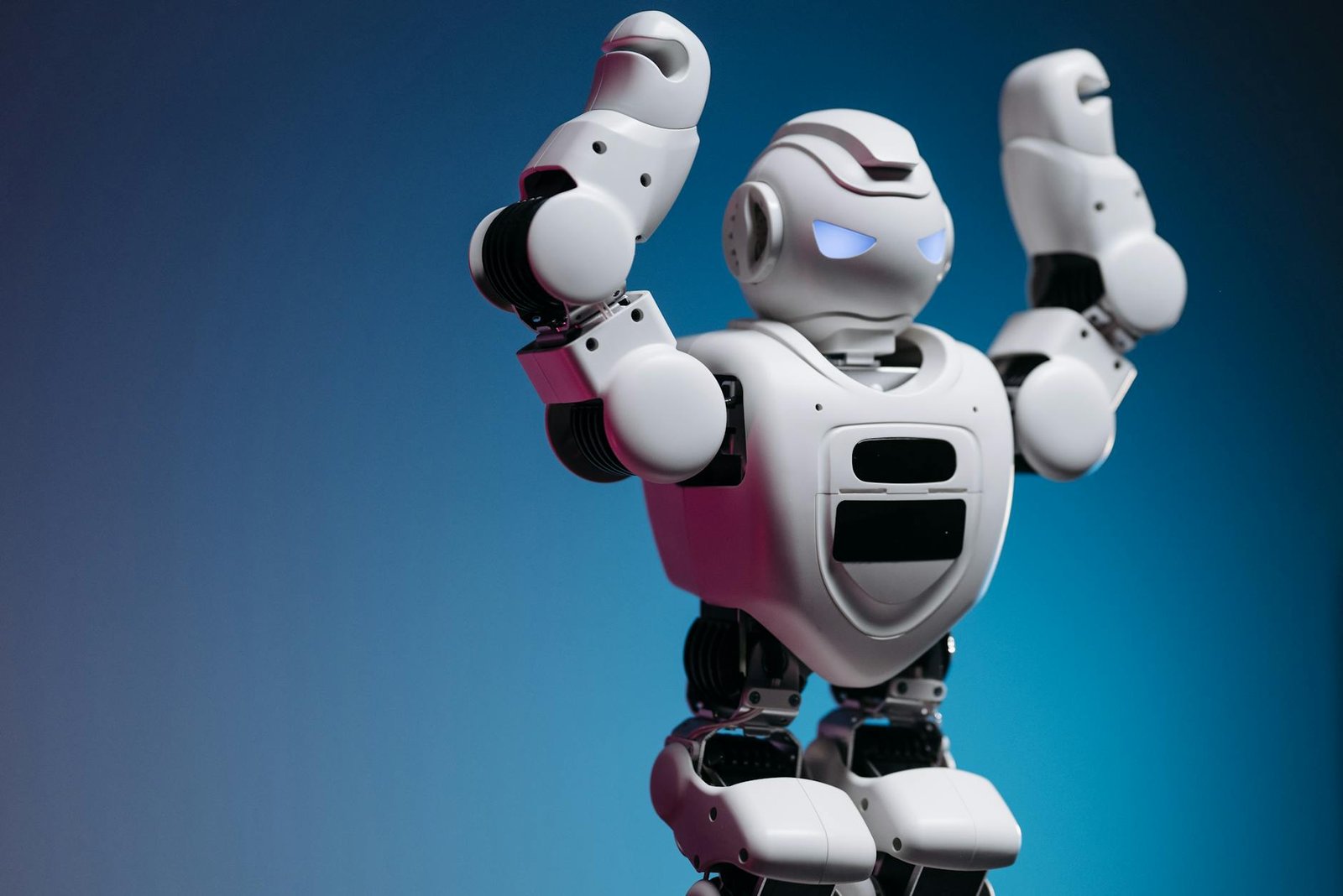
Digit stands approximately 5 feet 9 inches tall, weighs around 65 kilograms, and is designed from the ground up to operate in human-centric spaces. Unlike wheeled warehouse robots — which require flat, obstacle-free paths — Digit uses bipedal locomotion to navigate the same terrain a human worker would. It can step over obstacles, adjust to uneven surfaces, and operate in aisles and corridors that would stop a wheeled system cold.
The robot’s arms are engineered for payload tasks in the range of 16 kilograms per carry cycle, which covers the majority of tote-moving and materials-handling operations in a standard warehouse or light manufacturing environment. Digit does not have dexterous fingers in the human sense — its end effectors are optimized for grasping standardized containers rather than performing fine manipulation. That is a deliberate design choice: Agility Robotics built Digit to be excellent at a specific category of tasks rather than mediocre at everything.
What makes Digit commercially viable in 2026 is not just its hardware — it is the software stack behind it. Agility’s fleet management and task-assignment systems allow a single human operator to oversee multiple Digit units simultaneously, dramatically improving the economics of deployment. The company has also invested heavily in safety systems, including real-time collision avoidance and human-proximity protocols that allow Digit to work alongside people without requiring physical separation barriers.
This is a fundamentally different value proposition from the industrial robots of the previous generation. And it is one that Toyota and GXO have clearly found compelling enough to move from evaluation to active deployment.
Real-World Impact: What This Means for Factories, Workers, and Supply Chains
The deployment of humanoid robots at scale raises immediate questions about workforce displacement — and the honest answer is more nuanced than either side of the debate typically acknowledges. Research from the Manufacturing Institute suggests that for every robot deployed in a labor-shortage environment, the net effect on employment is closer to neutral or mildly positive, because the alternative is not a human worker doing that job — it is the job going unfilled and production targets being missed.
That framing matters enormously. A factory that cannot staff its tote-moving operation does not produce more goods by leaving the role empty. It either slows production, pays significant overtime premiums to existing workers, or turns to expensive temporary staffing solutions. A humanoid robot that fills that role reliably and at predictable cost is not taking a job from a person — it is enabling the facility to function at designed capacity.
For supply chains, the implications are significant. GXO Logistics handles fulfillment operations for some of the largest retailers and manufacturers in the world. Deploying Digit across even a fraction of its facilities could meaningfully reduce the throughput variability that has plagued logistics networks since the pandemic-era labor disruptions of the early 2020s. Predictable robotic labor is, in supply chain terms, a form of resilience.
For workers themselves, the picture is more complex. Roles that involve repetitive physical labor — the kind most associated with injury, burnout, and high turnover — are the primary targets for humanoid robot deployment. Workers displaced from those roles by automation will need pathways to higher-skill positions, and the industry’s track record on managing that transition is mixed at best. The companies that handle this well will build durable workforces. Those that do not will face a different kind of labor crisis.
It is also worth noting that the workforce debate around robotics does not exist in isolation from broader conversations about technology’s role in employment. For a counterpoint to the most alarmist projections, the MIT Study Challenges the Job Apocalypse Narrative — and its findings are directly relevant to how we should interpret humanoid robot deployments in manufacturing.
Humanoid Robot Comparison: Leading Platforms in 2026
| Robot | Company | Height | Payload | Primary Use Case | Commercial Status (2026) |
|---|---|---|---|---|---|
| Digit | Agility Robotics | 5’9″ | ~16 kg | Warehouse tote handling, manufacturing support | Active commercial deployment |
| Optimus Gen 2 | Tesla | 5’8″ | ~20 kg | Tesla factory operations | Internal deployment, limited external sales |
| Atlas (HD) | Boston Dynamics | 6’0″ | ~25 kg | Heavy industrial inspection, R&D | Pilot programs, select enterprise clients |
| Figure 02 | Figure AI | 5’6″ | ~20 kg | Automotive manufacturing, logistics | BMW partnership, scaling deployment |
| Apollo | Apptronik | 5’8″ | ~25 kg | Manufacturing, healthcare logistics | GE Aerospace partnership, early commercial |
Tools for Businesses Navigating the Automation Era
As humanoid robots move from novelty to operational infrastructure, the businesses managing these deployments face real challenges around data security, workforce coordination, and operational continuity. Here are tools worth evaluating:
NordVPN for Teams — Manufacturing and logistics facilities integrating connected robotics platforms into their operations need robust network security. NordVPN’s business tier provides encrypted tunneling and zero-trust access controls that protect the operational technology networks these robots run on. As factory floors become more connected, perimeter security becomes non-negotiable.
1Password Business — Fleet management systems, robot configuration dashboards, and vendor portals all require secure credential management. 1Password Business offers enterprise-grade password management with audit trails and role-based access — critical for facilities where multiple operators and contractors are accessing sensitive automation systems.
Backblaze Business Backup — Robotics deployments generate enormous volumes of operational data: sensor logs, task histories, maintenance records, and performance telemetry. Backblaze provides cost-effective cloud backup at scale, ensuring that critical operational data is protected against hardware failure or ransomware incidents.
Some links are affiliate links. TopTechNews may earn a commission at no cost to you.
What to Watch Next in Humanoid Robotics
The Agility Robotics deployments at Toyota and GXO are a bellwether, not an endpoint. Several developments in the next 12 to 24 months will determine how quickly humanoid robots scale from dozens of units to thousands:
Dexterity breakthroughs: The current generation of humanoid robots excels at moving standardized containers but struggles with irregular objects and fine manipulation tasks. The next wave of end-effector development — informed by advances in tactile sensing and force feedback — will dramatically expand the range of tasks these robots can perform. Companies that crack general-purpose dexterity will unlock an order-of-magnitude larger addressable market.
Battery and runtime improvements: Most current humanoid platforms operate for four to eight hours on a charge before requiring a recharge cycle. For a robot to be genuinely useful across a full industrial shift, runtime needs to reach ten to twelve hours minimum. Solid-state battery integration is the most promising near-term path to hitting that threshold.
Regulatory frameworks: As humanoid robots enter shared workspaces at scale, regulators in the U.S., EU, and Canada will need to establish safety standards for human-robot cohabitation. OSHA in the United States has already begun preliminary consultations on updated guidelines. How those frameworks develop will significantly influence deployment timelines and insurance costs for early adopters.
Competitive pricing pressure: The entry cost for a Digit deployment is currently estimated in the range of $150,000 to $250,000 per unit including integration costs. As manufacturing volumes increase and competition intensifies — particularly from Chinese humanoid robotics companies entering Western markets — per-unit costs are expected to fall sharply. A price point below $50,000 per unit would open the market to mid-size manufacturers currently priced out.
Workforce transition programs: The companies that deploy humanoid robots most successfully will be those that invest simultaneously in upskilling programs for their human workforce. Watch for partnerships between robotics vendors and community colleges, trade schools, and workforce development organizations as the industry tries to get ahead of the displacement narrative. The political and regulatory environment for humanoid robotics will be shaped significantly by how well this transition is managed.
For context on how the broader technology landscape is grappling with automation and workforce questions, the debate around technology governance and responsibility is directly relevant to how humanoid robotics regulation will evolve over the next several years.
Conclusion: The Robots Are Here — Now What?
The deployment of Agility Robotics’ Digit at Toyota Canada and GXO Logistics is not a preview of the future. It is the future, arriving on schedule, clocking in for its shift. In the context of robotics 2026, this moment marks a genuine inflection point: the transition from humanoid robots as a research curiosity to humanoid robots as operational infrastructure.
The manufacturing labor crisis is real, structural, and not going away. An aging workforce, declining enrollment in trade programs, and the sustained unattractiveness of physically demanding floor roles have created a vacuum that human labor cannot fill at the pace industry requires. Humanoid robots are not the only answer to that problem — but they are increasingly the most flexible, scalable, and economically viable one available.
The companies that move early — that build the operational expertise, the safety protocols, and the workforce transition programs now — will have a significant competitive advantage as per-unit costs fall and deployment scales. Those that wait for the technology to mature further may find that their competitors have already locked in the learning curve advantages that come with being first.
For businesses operating in manufacturing, logistics, or any sector where physical labor is a bottleneck, the question is no longer whether humanoid robots will be part of the operational picture. The question is when, and how prepared you will be when they arrive. Securing your connected infrastructure with tools like NordVPN for Teams is a practical first step toward building the secure, connected operational environment that robotic deployments require.
The robots are coming for the jobs no one wants. And for an industry that cannot fill those jobs any other way, that is not a threat — it is a lifeline.