When I first read about this story, I genuinely had to sit down for a moment. I played Pokémon Go in 2016 like millions of others — wandering around my neighborhood, spinning PokéStops, feeling like I was just goofing off with a fun mobile game. Knowing now what all those little scanning sessions were quietly building in the background? It completely changed how I think about “free” apps and the data they collect. If you’ve ever felt confused about how AI systems actually get trained, or why tech companies offer free games and tools, this guide is going to answer a lot of questions you didn’t even know you had.
Key Takeaways
- Niantic collected over 30 billion images from Pokémon Go players over a decade, using that data to build a real-world navigation system now powering delivery robots.
- PokéStops were not placed randomly — their locations were strategically chosen to maximize photo coverage of urban environments for mapping purposes.
- This practice of harvesting user-generated data for AI training is widespread, with Google’s reCAPTCHA being another well-known example.
- Delivery robots guided by this system are already operating in cities including Los Angeles, Chicago, and Helsinki.
- The story raises important questions about informed consent, data ownership, and the future of crowdsourced AI training in gaming and everyday apps.
What Actually Happened: The Pokémon Go Revelation
Pokémon Go players spent years unknowingly contributing to one of the most ambitious real-world AI mapping projects ever assembled — and the full picture only became clear when Niantic, the game’s original developer, announced a major commercial deal involving delivery robots. Here is the short answer: Niantic retained all the visual data collected through Pokémon Go even after selling the game itself to mobile gaming company Scopely in 2025. That data — more than 30 billion images captured by players over roughly a decade — now forms the backbone of a navigation system guiding autonomous delivery robots through real city streets.
To understand why this is such a big deal, it helps to start from the very beginning. Let’s break down exactly what happened, why it matters, and what it means for anyone who uses apps, plays games, or simply walks around with a smartphone.
How Crowdsourced AI Training Works: A Beginner’s Explainer
What Is AI Training Data, and Why Does It Matter?
Artificial intelligence systems — especially the kind that help robots navigate physical spaces — do not learn the way humans do. They cannot simply look at a street corner once and understand it. Instead, they need to be shown thousands or even millions of examples of that same type of environment before they can reliably recognize and navigate it. This process is called machine learning, and the examples used to teach the AI are called training data.
Think of it like teaching a child to recognize a dog. You don’t show them one photo and call it done. You show them hundreds of dogs — big ones, small ones, fluffy ones, dogs in the rain, dogs at night — until the concept clicks. AI systems work the same way, just at a vastly larger scale.
What Is Crowdsourced Data Collection?
Crowdsourcing simply means distributing a task across a large number of people, often without those people being formally employed to do it. When a company uses its own app users to generate training data — usually without explicitly telling them — that is called passive crowdsourced data collection. It is efficient, inexpensive, and enormously powerful. It is also, as this story illustrates, ethically complicated.
How Pokémon Go Players Spent Years Training Delivery Robots Without Realizing It
The Strategic Placement of PokéStops
One of the most striking details to emerge from Niantic’s announcement is that PokéStops — the in-game landmarks players visited to collect items — were never placed randomly. Their locations were deliberately chosen to ensure comprehensive photographic coverage of urban environments. Busy intersections, building entrances, parks, pedestrian crossings: all of these were prioritized because they represent exactly the kinds of complex, real-world scenarios that a robot navigation system needs to understand.
Players who visited these stops were often prompted to use the app’s scanning feature, which captured short video clips of the surrounding area from multiple angles. Over ten years, this generated an extraordinary dataset: more than 30 billion images of real urban environments, captured in all kinds of lighting conditions, weather, and times of day.
From Game Scans to Robot Eyes
Niantic used this image library to train a visual positioning system — essentially a form of computer vision that allows a robot to look at its surroundings and understand precisely where it is, even without GPS. GPS is useful for broad navigation, but it is not accurate enough to guide a robot safely down a busy sidewalk or through a crowded plaza. Visual positioning, trained on billions of real-world images, fills that gap.
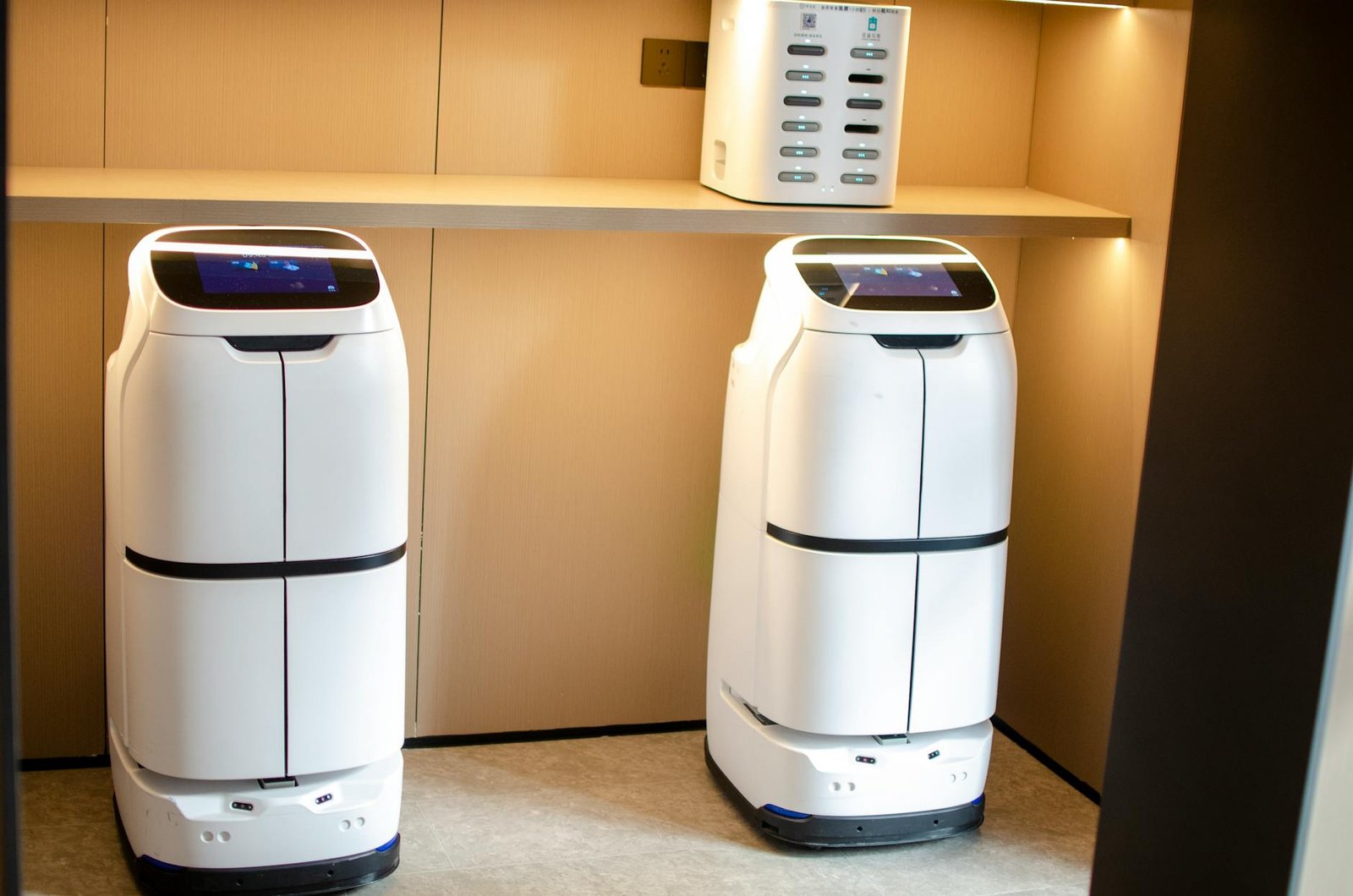
The result is a navigation platform that is now being used to guide autonomous delivery robots in three major cities: Los Angeles, Chicago, and Helsinki. These robots can move through complex urban environments, avoid pedestrians, and make deliveries — all thanks in significant part to the walking, scanning, and exploring that Pokémon Go players did for fun over the past decade.
| City | Robot Deployment Status | Key Use Case |
|---|---|---|
| Los Angeles, USA | Active | Last-mile delivery in urban districts |
| Chicago, USA | Active | Sidewalk navigation in dense neighborhoods |
| Helsinki, Finland | Active | Mixed pedestrian and delivery environments |
You’ve Done This Before: reCAPTCHA and Other Hidden Data Harvests
If this feels unsettling, it may help — or perhaps not — to know that this kind of hidden data harvesting is not new. Google’s reCAPTCHA system is one of the most widely cited examples. Every time you clicked on a grid of traffic lights or fire hydrants to prove you were human, you were simultaneously labeling visual data that was used to train self-driving car algorithms. Millions of internet users contributed countless hours of unpaid annotation work without any meaningful disclosure.
The pattern is consistent: a company offers a free service that requires user interaction, and that interaction quietly generates valuable training data. The users get the free service; the company gets a dataset worth potentially billions of dollars in commercial applications.
Industry analysts note that this model has become a foundational strategy in AI development, particularly for companies building systems that need to understand the physical world. The economics are straightforward — hiring professional data labelers at scale is prohibitively expensive, while embedding data collection into a popular free product costs almost nothing per data point.
Why This Matters: The Bigger Picture for AI Development
To appreciate the scale of what Niantic assembled, consider this: professional autonomous vehicle companies typically spend enormous resources sending specially equipped vehicles around cities to capture mapping data. According to IEEE Spectrum, the cost of building and maintaining high-definition maps for autonomous navigation is one of the most significant barriers to scaling self-driving and robot delivery technology.
Niantic effectively bypassed that problem entirely. By designing a game that incentivized players to visit specific locations and scan their surroundings, they built a mapping dataset of extraordinary depth and geographic diversity — covering not just major roads but sidewalks, alleys, building facades, and pedestrian zones — at a fraction of the traditional cost.
What makes this particularly significant is the temporal depth of the data. Ten years of images from the same locations means the system has seen those environments across seasons, under construction, after renovation, and in countless lighting and weather conditions. That kind of longitudinal data is exceptionally rare and valuable for training robust navigation systems.
What This Means for Everyday Users and the Tech Industry
The Consent Question
What this means for users is a fundamental question about informed consent. Most Pokémon Go players agreed to terms of service that technically permitted this kind of data use — but terms of service documents are notoriously long, complex, and rarely read. There is a meaningful difference between technically consenting to data collection and genuinely understanding that your afternoon walk through downtown was contributing to a commercial robotics platform.
In practice, this story is likely to intensify ongoing debates around data privacy legislation, particularly in the European Union where GDPR regulations require clearer disclosure of how personal data — including images that may capture individuals’ faces and locations — is used commercially.
The Value Exchange Problem
There is also a broader economic question here. If players collectively contributed labor that enabled a commercially valuable AI system, should they have received any compensation? This is not a simple question to answer, but it is one that regulators, ethicists, and technologists are increasingly being forced to confront as AI training becomes ever more dependent on user-generated content.
For the tech industry, this story demonstrates just how powerful gamification can be as a data collection strategy. Expect to see more companies — not just in gaming, but across fitness apps, navigation tools, and social platforms — designing user experiences with dual purposes: entertainment or utility on the surface, and systematic data harvesting underneath.
If you’re interested in exploring the technology behind autonomous navigation and AI hardware, here are some relevant products worth knowing about:
As an Amazon Associate, I earn from qualifying purchases.
- Autonomous Robot Navigation Kits — Great for understanding how robot pathfinding works at a hands-on level.
- Computer Vision Development Boards — Explore how visual AI systems process real-world imagery.
- AI and Machine Learning Books for Beginners — Build your foundational understanding of how systems like this are trained.
- Raspberry Pi Robotics Kits — A practical starting point for experimenting with computer vision and navigation projects.
You might also want to read our guide on how AI companies collect and use your personal data, and our explainer on how autonomous delivery robots actually work. For more context on gaming and data, check out our piece on why free apps are never really free.
What to Watch Next: The Future of Crowdsourced Machine Learning
The Niantic story is almost certainly not an isolated case — it is a preview of where the industry is heading. As AI systems become more sophisticated and their appetite for training data grows, the pressure on companies to find cost-effective data sources will only increase. Crowdsourced collection through consumer apps represents the most scalable solution available.
Several trends are worth watching closely over the next few years. First, regulatory responses: the EU’s AI Act and evolving GDPR enforcement may begin to require more explicit disclosure when apps collect data for AI training purposes. Second, the emergence of data compensation models: some startups are already experimenting with paying users directly for their data contributions, which could reshape the economics of AI training entirely. Third, the expansion of this model beyond navigation: similar approaches could be applied to indoor mapping, agricultural monitoring, healthcare diagnostics, and any other domain where large-scale real-world visual data is valuable.
Industry analysts note that the Niantic case will likely become a landmark example studied in both technology ethics courses and corporate strategy sessions for years to come. It demonstrates both the extraordinary power of patient, long-term data collection strategies and the reputational risks that come with a lack of transparency about those strategies.
For anyone who plays mobile games, uses navigation apps, or interacts with any free digital service: the most important takeaway is to ask a simple question before you engage. What is this interaction actually for? The answer may surprise you.