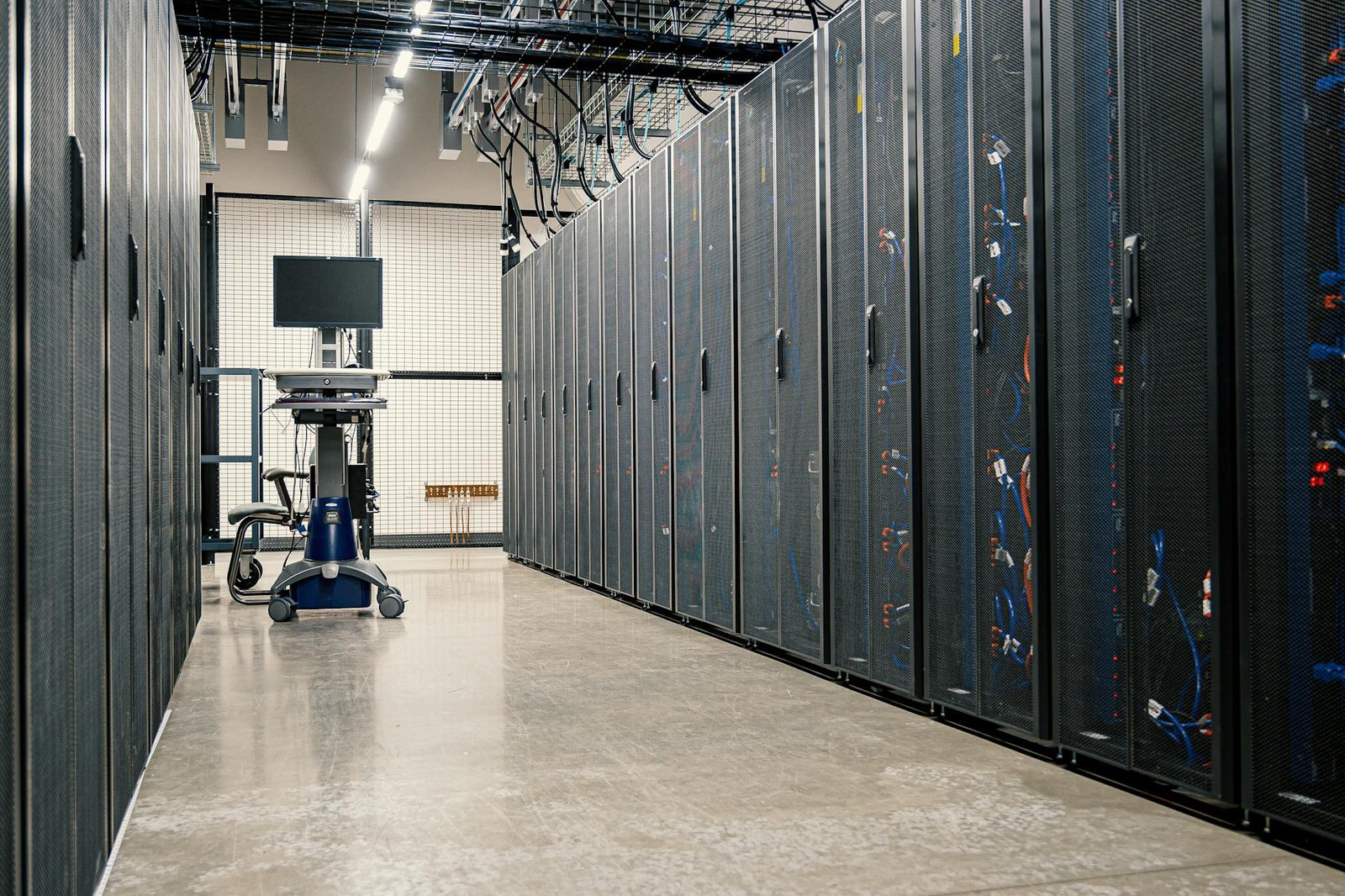
When I first started paying attention to how much electricity the internet actually uses, I genuinely had no idea that a single data center could consume as much power as a small city. It took me a while to connect the dots between my Netflix binge, my Google search, and a massive warehouse full of humming servers somewhere in rural Virginia. If you have ever felt confused about why politicians are suddenly talking about data centers like they are the next big environmental crisis, you are absolutely not alone — and I wrote this guide specifically to help you catch up without needing a computer science degree.
Key Takeaways
- Senators Bernie Sanders and Alexandria Ocasio-Cortez have introduced legislation that would temporarily halt the construction of new large-scale data centers across the United States.
- The bill targets the rapidly growing energy and water demands of AI-driven data infrastructure, which critics say is straining local power grids and communities.
- Data centers currently account for roughly 2 to 3 percent of total U.S. electricity consumption, a figure projected to more than double by 2030.
- The proposed moratorium would remain in place while federal regulators study the environmental and community impact of new builds.
- Tech industry groups have pushed back strongly, warning the pause could slow AI development and cost thousands of jobs.
What Is the Sanders-AOC Data Center Bill?
Bernie Sanders introduce bill alongside Representative Alexandria Ocasio-Cortez in March 2026 that would place a temporary moratorium — essentially a legal pause — on the construction of new large-scale data centers in the United States. The legislation asks federal agencies to conduct a thorough review of the environmental footprint, water consumption, and community impact of these facilities before any new ones are approved and built. In short, it is a “stop and think” moment aimed at one of the fastest-growing and least-discussed drivers of energy demand in the modern economy.
This is not a ban. It is a pause with a purpose. Think of it like hitting the snooze button on a massive construction boom so that regulators can ask some important questions that, critics argue, nobody has been asking loudly enough until now.
What Is a Data Center, Anyway?
Before we dive into the politics, let us make sure we are all on the same page about what a data center actually is — because this is where a lot of people get lost.
A data center is essentially a giant building filled with thousands of computers called servers. These servers store and process information around the clock. Every time you send an email, stream a video, ask an AI chatbot a question, or shop online, your request travels to one of these buildings, gets processed, and comes back to you in seconds. Without data centers, the modern internet simply does not exist.
Here is the catch: all of those servers generate enormous amounts of heat, which means data centers need massive cooling systems running 24 hours a day, 7 days a week. That cooling requires two things in huge quantities — electricity and water. A single large-scale data center can use between 20 and 50 megawatts of power, which is enough to supply electricity to tens of thousands of homes.
Why Has AI Made This Worse?
Artificial intelligence has turbocharged the demand for data center capacity. Training a large AI model or running a popular AI assistant requires vastly more computing power than a standard web search. Industry analysts note that the rise of generative AI tools since 2022 has caused data center power demand to spike in ways that utility companies and local governments were simply not prepared for. This is the core reason why this legislation is landing now rather than five years ago.
Why Did Bernie Sanders Introduce This Bill Now?
The timing is not accidental. The United States has seen an unprecedented wave of data center construction announcements over the past two years, with tech giants and AI companies committing hundreds of billions of dollars to new facilities. According to industry research, more than 5,000 data centers currently operate across the United States, making it the country with the highest concentration of these facilities anywhere in the world.
Sanders and Ocasio-Cortez argue that this construction boom is happening too fast, without adequate public oversight, and at a real cost to local communities. Their concerns center on three main areas.
First, there is the electricity grid strain. New data centers are gobbling up power capacity that was supposed to serve residential neighborhoods and local businesses. In some regions, utilities have warned that they cannot guarantee reliable power to existing customers if large new data centers connect to the grid.
Second, there is water. Cooling systems in data centers consume millions of gallons of water per day. In drought-prone states like Arizona, Nevada, and parts of the Southwest, this is an increasingly serious concern for communities that are already managing scarce water resources.
Third, there is the question of who benefits. Sanders and AOC argue that the profits from AI infrastructure flow overwhelmingly to large corporations and wealthy shareholders, while the burden of increased energy costs, noise pollution, and strained local infrastructure falls on working-class communities near these facilities. You can read more about the environmental and social impact of data centers on Wikipedia for a broader overview of these ongoing debates.
The Energy Problem, Explained Simply
Let us use an analogy. Imagine your neighborhood has a water tower that supplies everyone with water. It has always been enough. Then, suddenly, a massive factory moves in next door and starts drawing from that same water tower around the clock. Your water pressure drops. Your neighbors start complaining. The factory is legal, it is profitable, and it is creating jobs — but it is also creating real problems for everyone who was already there.
That is essentially what is happening with electricity grids in communities near major data center hubs. Data centers currently account for an estimated 2 to 3 percent of total U.S. electricity consumption. That number sounds small until you realize that the figure is projected to climb to between 6 and 12 percent by 2030, driven almost entirely by AI workloads. Some independent energy analysts have suggested that figure could be even higher depending on how quickly AI adoption continues to accelerate.
For context, the entire U.S. residential lighting sector uses roughly 4 percent of national electricity. Data centers are on track to surpass that within this decade. You can explore detailed energy consumption data and projections at the International Energy Agency’s dedicated data center resource page.
What the Bill Actually Does
In plain English, the legislation would do the following things if passed into law.
It would immediately pause federal approvals for new large-scale data center construction projects. It would direct the Environmental Protection Agency, the Department of Energy, and other relevant federal bodies to conduct a comprehensive study of the cumulative impact of data center expansion on local power grids, water supplies, and community wellbeing. It would also require that any future data center approvals meet new environmental standards and include community benefit agreements — basically, legally binding promises to the local community about jobs, infrastructure investment, and environmental mitigation.
The moratorium would not apply to smaller facilities or to upgrades and expansions of existing data centers below a certain size threshold. The focus is squarely on the mega-campuses that major cloud providers and AI companies have been racing to build.
How the Tech Industry Is Responding
As you might expect, the reaction from the technology sector has been swift and largely negative. Industry groups representing major cloud providers and AI companies argue that a pause in data center construction would directly harm U.S. competitiveness in artificial intelligence at a moment when the race with other countries — particularly China — is intensifying.
In practice, opponents of the bill say that any moratorium, even a temporary one, sends a chilling signal to investors and could cause companies to redirect billions of dollars in planned U.S. investment to other countries with fewer regulatory hurdles. They also argue that the industry is already making significant voluntary commitments to renewable energy and water efficiency.
Supporters of the bill counter that voluntary commitments have not been sufficient and that without regulatory teeth, the industry will continue to prioritize speed and profit over community impact. This is a debate that is likely to intensify significantly in the months ahead as the legislation moves through Congress — or fails to.
What This Means for Everyday People
What this means for users and consumers is nuanced and depends heavily on where this legislation ends up going.
If the bill passes and a moratorium takes effect, you are unlikely to notice any immediate change in your ability to use AI tools, stream content, or browse the web. Existing data centers would continue operating normally. The impact would be felt over a longer time horizon, potentially slowing the rollout of new AI features or cloud services if capacity becomes constrained.
If you live near a planned or existing data center, the bill’s community benefit provisions could be directly meaningful to you — potentially translating into local job guarantees, infrastructure investment, or protections against electricity rate increases driven by industrial demand.
For broader society, the legislation raises questions that go well beyond this single bill: Who gets to decide how the infrastructure of the AI economy is built? Who pays the costs? And who gets the benefits? These are questions that Sanders and AOC are betting resonate with voters far beyond the typical tech policy audience.
Data Center Energy Use at a Glance
| Factor | Current Status (2026) | Projected (2030) |
|---|---|---|
| Share of U.S. Electricity Use | 2 to 3 percent | 6 to 12 percent |
| Number of U.S. Data Centers | Over 5,000 | Projected to grow significantly |
| Average Power Use Per Large Facility | 20 to 50 megawatts | New hyperscale sites exceed 100 MW |
| Daily Water Use (Large Facility) | Millions of gallons | Increasing with AI cooling demands |
| Global Data Center Investment (Annual) | Hundreds of billions USD | Expected to accelerate |
Want to learn more about the technology behind this story? Check out our guide to how AI is reshaping global energy demand and our explainer on what cloud computing actually means for your everyday life.
As an Amazon Associate, I earn from qualifying purchases.
If this topic has sparked your interest in understanding more about the technology that powers our digital world, here are some well-reviewed resources to explore further:
- Data Center Technology Books on Amazon — Excellent beginner-friendly reads on how modern infrastructure works.
- AI and Energy Efficiency Computing Resources on Amazon — Explore hardware and literature focused on sustainable computing.
- Smart Home Energy Monitors on Amazon — See your own household energy use in real time and understand consumption at a personal level.
- Renewable Energy Technology Guides on Amazon — Understand the clean energy solutions being proposed for data center power demands.
What to Watch Next
This bill faces a challenging path through Congress, and political observers are divided on whether it has the votes to advance in its current form. However, even if the legislation stalls, it is already doing something important: it is forcing a public conversation about the hidden costs of the AI boom that the industry would strongly prefer to keep out of the headlines.
Watch for the following developments in the coming months. First, pay attention to how major cloud providers and AI companies respond — whether they double down on opposition or begin to negotiate on community benefit provisions. Second, look for state-level action, as several states with high concentrations of data centers are already considering their own regulatory frameworks independent of federal action. Third, watch the energy sector, where utility companies are increasingly vocal about the strain that AI infrastructure is placing on grids that were not designed for this level of industrial demand.
Industry analysts note that this legislation, whether it passes or not, marks a turning point in how policymakers think about AI infrastructure. The days of data centers being treated as invisible, uncontroversial utilities are likely coming to an end. The question is not whether oversight is coming — it is what form that oversight will take and how quickly it will arrive. For anyone following the intersection of technology, energy policy, and economic justice, this is one of the most consequential stories of 2026.
Frequently Asked Questions
What is the Bernie Sanders and AOC data center bill?
The bill introduced by Senator Bernie Sanders and Representative Alexandria Ocasio-Cortez in March 2026 would place a temporary moratorium on the construction of new large-scale data centers in the United States while federal agencies study their environmental, energy, and community impact.
How does a data center use so much energy?
Data centers house thousands of servers that run continuously, generating large amounts of heat. Massive cooling systems must operate around the clock to prevent overheating, and both the servers and the cooling infrastructure require enormous amounts of electricity. A single large data center can consume between 20 and 50 megawatts of power.
What does the data center moratorium mean for AI services?
In the short term, existing AI services and cloud platforms would not be affected since the moratorium targets new construction only. Over a longer period, if capacity growth is constrained, it could slow the rollout of new AI features or services, though the bill’s supporters argue this is an acceptable trade-off for proper environmental oversight.
When will the Sanders-AOC data center bill become law?
The bill was introduced in March 2026 and faces a difficult path through Congress. As of the publication date, it has not been passed into law. Political analysts note it may face significant opposition from technology industry lobbying groups, but it could still influence state-level legislation and industry practices regardless of its federal outcome.
Why are data centers a concern for local communities?
Large data centers can strain local electricity grids, raising energy costs for nearby residents and businesses. They also consume millions of gallons of water daily for cooling purposes, which is a serious concern in drought-prone regions. Additionally, the economic benefits often flow to large corporations rather than the local communities that bear the infrastructure burden.